
Keeping your boat lift parts properly lubricated is one of the simplest ways to keep them working smoothly and avoid costly repairs. Regular lubrication reduces friction, prevents premature wear, and helps your lift run reliably year after year. In this guide we cover which parts need attention, the best lubricants for marine use, and how to carry out effective maintenance so your lift performs at its best.
Research and field evaluations show that consistent boat lift maintenance — including correct lubrication — can deliver measurable cost savings and extend equipment life.
Boat Lift Maintenance: Cost Savings & Longevity
This report analyzes whether the cost of supplying and maintaining boat lifts at Coast Guard Boat Forces units is offset by savings from reduced maintenance and repairs on boats stored out of the water. It includes data and results from a one‑year in‑water evaluation of purchased boat lifts installed at various Coast Guard Boat Forces units and offers recommendations on whether the Coast Guard should pursue a boat lift solution to reduce long‑term maintenance costs. Key characteristics for the recommended lift style are also identified as lessons learned.
Cost Benefit Analysis of Boat Lifts, 2014
What follows: the boat lift parts that need lubrication, the types of marine hardware and their lubrication needs, top lubricant choices for marine environments, and a step‑by‑step lubrication process. We also cover corrosion prevention and a simple maintenance schedule to follow.
Which Boat Lift Parts Require Regular Lubrication?
Any moving part that sees friction or load should be part of your lubrication routine. Neglecting these items leads to accelerated wear and can compromise the lift’s safety and performance.
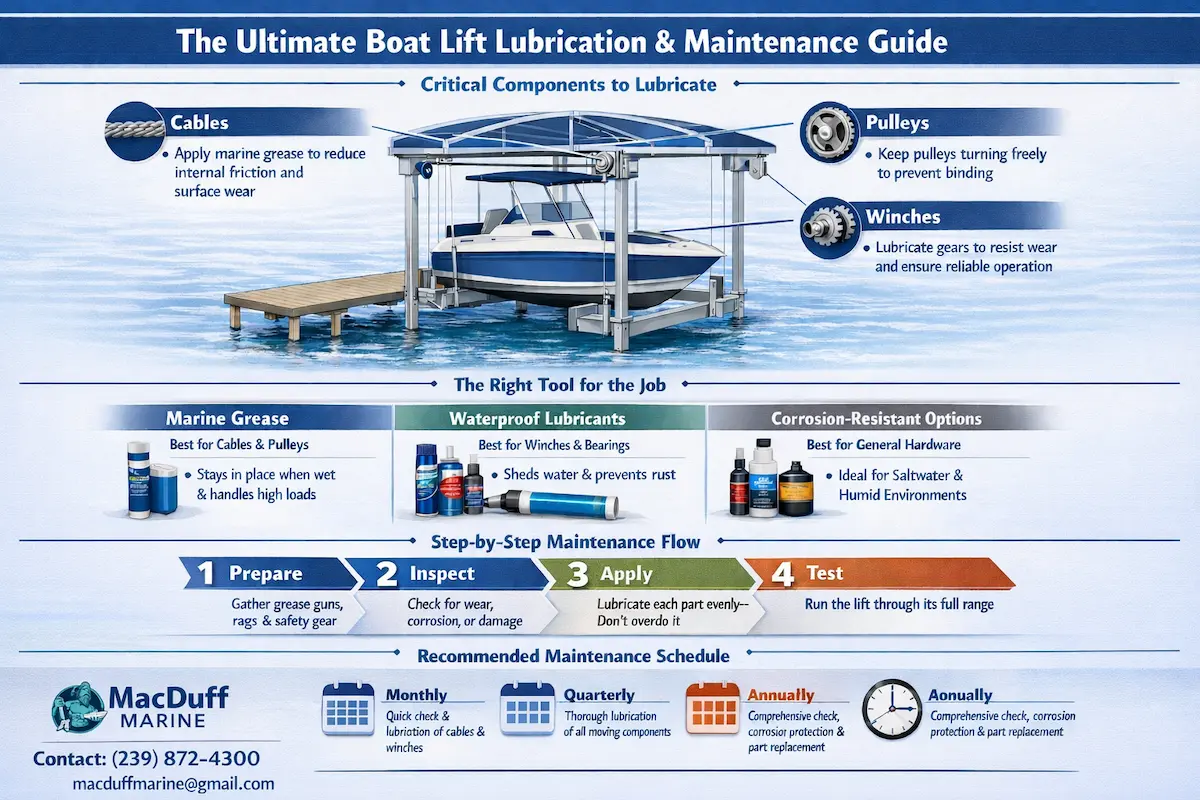
The critical components that require regular lubrication are:
- Cables: Lubrication reduces internal friction and surface wear, helping cables last longer.
- Pulleys: Proper lubrication keeps pulleys turning freely and prevents binding.
- Winches: Lubricated winches operate more reliably and resist gear wear.
Keeping these parts serviced on schedule helps your lift run smoother and reduces the chance of unexpected failures.
Understanding Marine Hardware and Its Lubrication Needs
Marine hardware covers a wide range of materials and designs, so each needs the right lubricant and approach. Matching lubricant to material and application is key to long‑term performance.
Key types of marine hardware include:
- Stainless Steel Components: Corrosion resistant but still prone to galling; a compatible lubricant prevents metal‑to‑metal wear.
- Aluminum Parts: Require lubrication that prevents oxidation and minimizes abrasive wear.
- Plastic and Composite Materials: Use lubricants formulated for softer materials to avoid swelling or degradation.
Using the correct product for the material keeps hardware moving correctly and extends service life.
What Are the Best Lubricants for Marine Boat Lift Parts?
For marine environments choose lubricants that repel water, resist corrosion, and handle the temperature range where you operate.
Here are some top lubricant recommendations for marine use:
| Lubricant Type | Description | Best Use |
|---|---|---|
| Marine Grease | Stays in place when wet, offers strong corrosion protection and load carrying ability | Cables and pulleys |
| Waterproof Lubricants | Specifically formulated to shed water and prevent rust | Winches and bearings |
| Corrosion-Resistant Options | Designed to withstand saltwater and high humidity | All marine hardware |
Selecting the right product for each component helps it resist the harsh marine environment and keeps systems dependable.
Comparing Marine Grease, Waterproof Lubricants, and Corrosion-Resistant Options
Each lubricant category has clear benefits depending on where it’s used. Choosing by application will get the best results.
- Marine Grease: Best for high‑load parts. It stays in place under pressure and shields metal from saltwater.
- Waterproof Lubricants: Ideal where washdown and spray are common; they repel water and keep contact surfaces protected.
- Corrosion-Resistant Options: Formulated for long‑term protection against salt and humidity — good for general hardware protection.
Match the lubricant’s strengths to the component’s needs to maximize protection and longevity.
How to Select Lubricants Based on Environmental Conditions
Local conditions play a big role in performance. Consider temperature swings, humidity, and salt exposure when choosing a lubricant.
Consider the following when choosing lubricants:
- Temperature Range: Choose products rated for the low and high temperatures typical in your area so they won’t harden or run off.
- Humidity Levels: In humid climates, favor stronger corrosion inhibitors and water‑shedding formulations.
- Saltwater Exposure: For saltwater installations, use lubricants specifically labeled for marine or salt‑water resistance.
Picking lubricants with appropriate environmental ratings ensures reliable protection where you operate.
How to Perform Step-by-Step Lubrication on Your Boat Lift Components?
Lubrication is straightforward when you follow a consistent process. These steps will help you stay efficient and thorough.
- Gather Tools and Materials: Have the recommended lubricants, grease gun, rags, brushes, and safety gear ready.
- Inspect Components: Look for wear, corrosion, or damage before applying lubricant.
- Apply Lubricant: Use the right product for each part and apply evenly—don’t overdo it.
- Test Operation: Run the lift through its range to work the lubricant in and confirm smooth operation.
Following these steps reduces downtime and keeps parts protected between service intervals.
Preparing Your Boat Lift for Maintenance: Safety and Tools
Safety first: simple precautions keep the job quick and accident‑free.
- Safety Precautions: Wear gloves and eye protection, and make sure the lift is stable and secured before working.
- Necessary Tools: Typical tools include wrenches, a grease gun, brushes, solvents for cleaning, and absorbent rags.
Good preparation speeds the job and lowers risk.
Detailed Lubrication Process for Cables, Pulleys, and Winches
Each component needs slightly different care. Use the right technique for best results.
- Cables: Clean to remove salt and grit, then apply marine grease along the length so it penetrates strands.
- Pulleys: Clean bearings and apply a waterproof lubricant to ensure they roll freely without binding.
- Winches: Disassemble where recommended, clean gears, and use a corrosion‑resistant lubricant on gears and moving parts.
Proper cleaning before lubrication makes the lubricant work better and lasts longer.
How Can You Prevent Corrosion on Boat Lift Parts Effectively?
Corrosion is a main failure mode in marine gear. Combining prevention techniques keeps components serviceable for longer.
Corrosion Mechanisms in Marine Environments
Corrosion happens when metal surfaces react with salt, moisture, and oxygen. Mechanical wear, dissimilar metals, and trapped moisture accelerate the process.
Techniques and Products for Corrosion Prevention
Use multiple strategies for the best protection:
- Protective Coatings: Paints, galvanizing or specialized anti‑corrosion coatings block moisture contact.
- Regular Maintenance: Clean and lubricate on schedule so small corrosion spots don’t become big problems.
- Use of Corrosion-Resistant Materials: When possible, choose stainless steel or treated aluminum to reduce corrosion risk.
Combining coatings, good materials and routine care is the most effective approach.
What Is the Recommended Maintenance Schedule for Boat Lift Lubrication?
Set a maintenance cadence based on usage and conditions; heavier use and harsher environments need more frequent attention.
Recommended Frequency Guidelines
- Monthly: Quick inspections and lubrication of high‑use parts like cables and winches.
- Quarterly: Thorough inspection and lubrication of all moving components.
- Annually: Comprehensive maintenance check, including corrosion protection and component replacement as needed.
Adjust this schedule if you operate in very salty water or use the lift heavily.
Safety Tips and Troubleshooting Common Lubrication Issues
Being mindful of common mistakes will keep your maintenance effective and safe.
Common Issues
- Over-Lubrication: Too much lubricant attracts dirt and can cause packing that restricts movement.
- Under-Lubrication: Too little leaves components exposed to friction and wear.
Troubleshooting Steps
- Inspect Regularly: Find problems early by checking components frequently for play, noise, or rust.
- Adjust Lubrication Frequency: Increase service intervals for heavy use or saltwater exposure, reduce if conditions are mild.
Staying observant and adjusting care based on what you find will keep systems reliable.
Where Can You Find Expert Advice and Quality Products for Boat Lift Care?
If you want reliable advice or high‑quality marine lubricants, MacDuff Marine can help. We provide products and guidance tailored to marine lifts and hardware.
Contact Information
- Phone: (239) 872-4300
- Email: [email protected]
MacDuff Marine supplies marine‑rated lubricants and practical maintenance solutions to keep your boat lift running smoothly and safely.
Benefits of Professional Consultation and Warranty Coverage
Working with professionals brings experience and protections that DIY alone can’t match.
- Expert Installation: Proper installation reduces early failures and improves long‑term performance.
- Tailored Solutions: Professionals can recommend lubrication and maintenance plans that match your location and usage.
- Warranty Coverage: Professional services often include warranties for added peace of mind.
Professional help can save time and prevent costly mistakes.
How to Request Estimates and Purchase Marine Lubricants
Getting the right products and an accurate estimate is simple if you provide a few details about your lift.
- Contact MacDuff Marine: Call or email to describe your lift and environment.
- Request an Estimate: Share lift type, usage, and any known issues so the estimate reflects your needs.
- Purchase Products: After you review the estimate, order the recommended lubricants and supplies.
Clear communication speeds up getting the right products and service.
Frequently Asked Questions
How often should I lubricate my boat lift parts?
As a rule of thumb: lubricate high‑use components like cables and winches monthly, do a full lubrication of moving parts quarterly, and perform a comprehensive annual check. Increase frequency for heavy use or saltwater exposure.
What type of lubricant is best for marine environments?
Choose marine grease for high‑load parts such as cables and pulleys, waterproof lubricants for winches and bearings that see spray, and corrosion‑resistant formulas for general protection against salt and humidity.
Can I use regular household lubricants on my boat lift?
Household lubricants typically lack the water resistance and corrosion protection required for marine gear. Use products designed and labeled for marine or saltwater use.
How can I prevent corrosion on my boat lift parts?
Prevent corrosion with protective coatings, scheduled cleaning and lubrication, and by using corrosion‑resistant materials like stainless steel or treated aluminum where feasible.
What safety precautions should I take when lubricating my boat lift?
Wear gloves and eye protection, secure the lift so it cannot move while you work, and use the correct tools and cleaning products for the job.
Where can I find expert advice and quality marine lubricants?
MacDuff Marine offers expert guidance and high‑quality marine lubricants. Call (239) 872-4300 or email at [email protected] for help.