
The best jet ski dock makes launching effortless, protects your hull, and gives you easy on‑water storage for your personal watercraft (PWC). Often called PWC ports or drive‑on ports, these systems are a must for frequent riders around Southwest Florida. This guide walks through dock styles, the features that matter in Florida’s climate, straightforward maintenance, and realistic costs and accessory trade‑offs so you can choose the best jet ski dock for your shoreline. We compare floating systems to fixed setups, explain why drive‑on Wave Armor PRO PORTs are popular, and cover UV‑ and corrosion‑resistant materials. You’ll also find local Wave Armor installation services, permitting basics, a practical dock maintenance guide, and notes on financing, warranties, and helpful accessories. Read on to compare options and pick the best jet ski dock for how you ride.
What is the Best Jet Ski Dock Type for Your Needs?
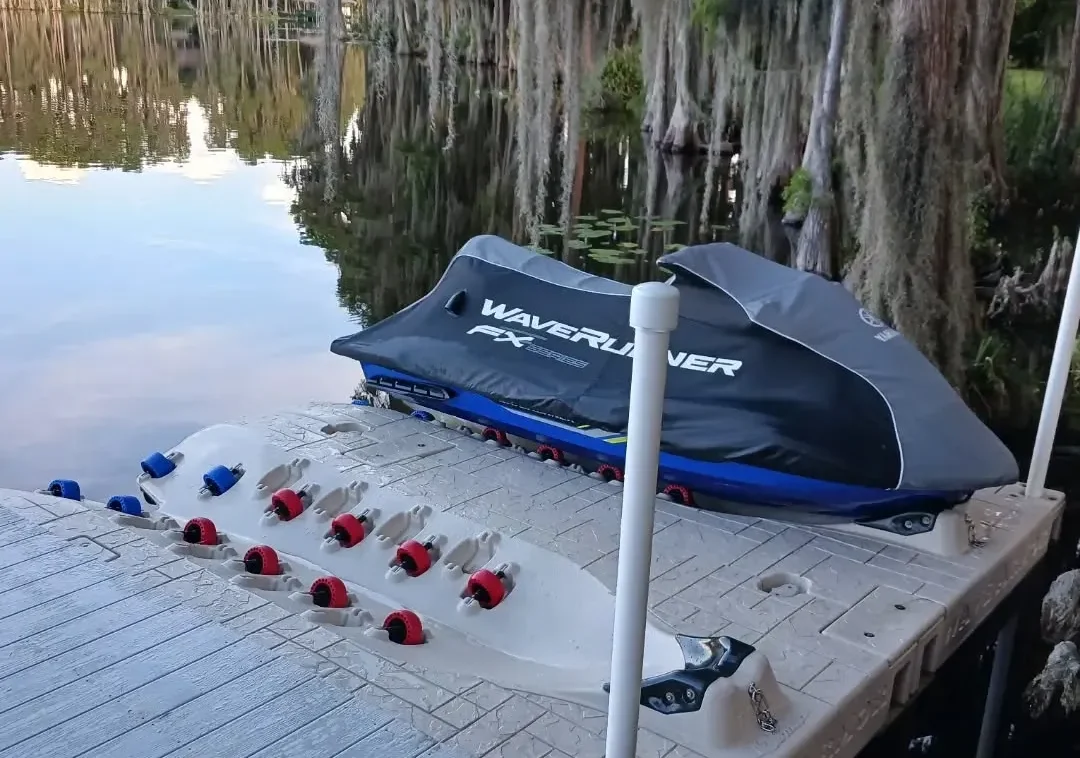
A jet ski dock streamlines PWC storage, launching, and retrieval. Typical options are floating docks, drive‑on PWC ports, fixed docks with lifts, and inflatable or temporary docks. Each solves a different problem: floating docks follow tides, drive‑on ports deliver fast, low‑contact storage, fixed docks add stability in deeper water, and inflatables work for seasonal use. Choosing the right dock depends on water depth, shoreline slope, how often you ride, exposure to storms, and whether you need room for multiple PWCs. Below we compare the main types to help you identify the best jet ski dock for your property.
- Floating docks: Rise and fall with the tide to reduce stress on pilings and hardware — ideal when depths change.
- Drive-on PWC ports: Let you drive the craft onto rollers and bow stops for fast launches and less hull contact.
- Fixed docks or lifts: Provide solid stability in deeper, calmer water but require more invasive installation.
- Inflatable or temporary docks: Low‑cost, portable choices that work well for seasonal or short‑term needs.
Those differences narrow your options. Next, we look at why floating docks are often the best jet ski dock choice for many waterfront properties.
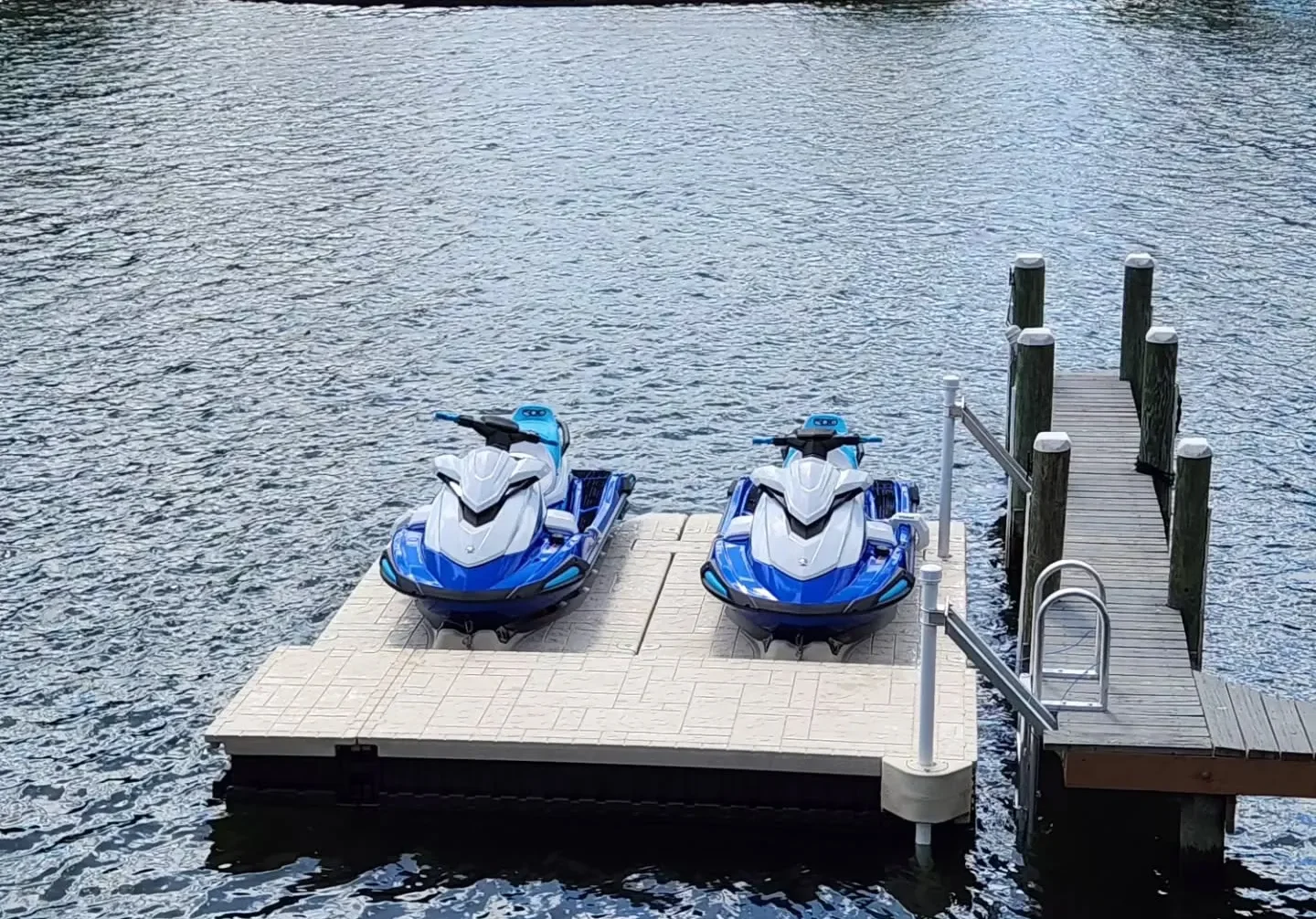
What Are the Benefits of Floating Jet Ski Docks for Waterfront Properties?
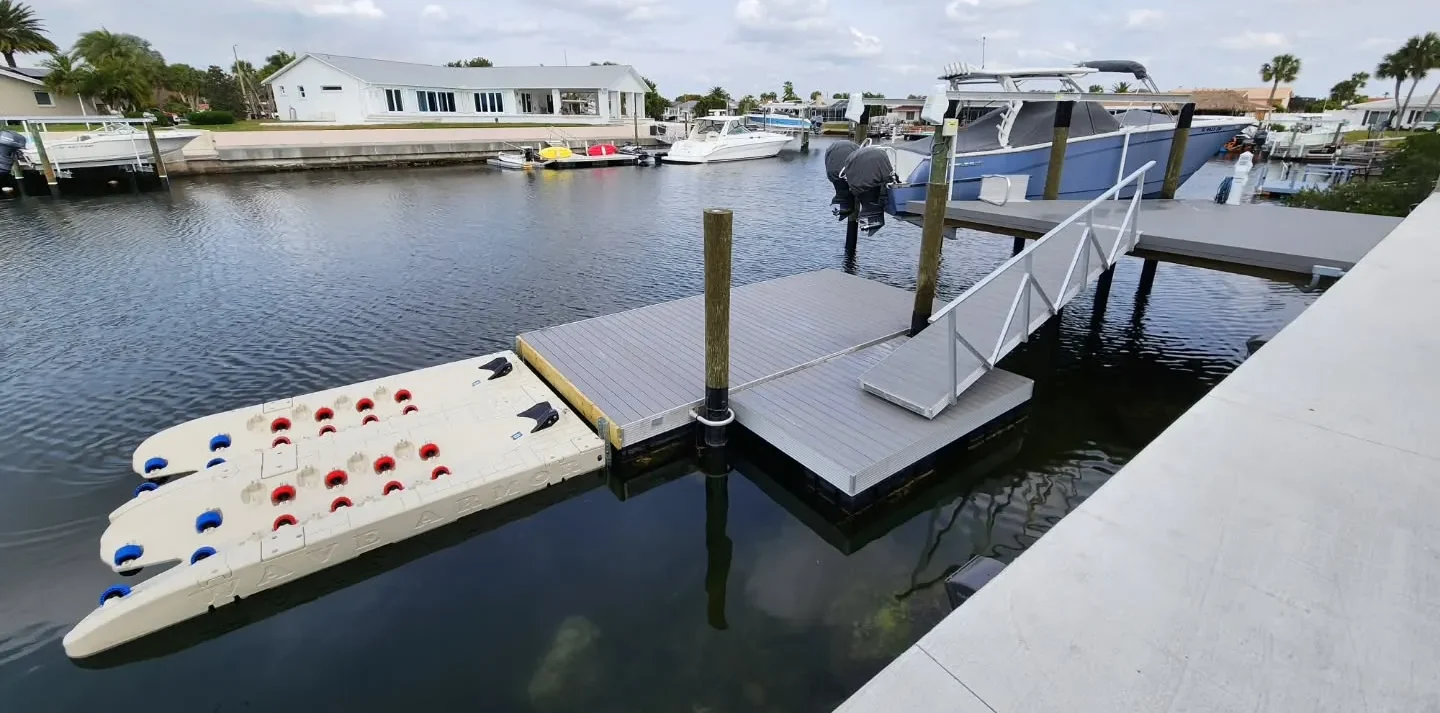
Floating jet ski docks are buoyant platforms — usually built from UV‑stable polyethylene or foam‑filled pontoons — that move with tidal changes. That movement reduces stress on attachment points and can remove the need for deep pilings, which helps on variable‑depth shorelines. Floating systems resist rot and corrosion much better than wood or metal, lowering long‑term upkeep in saltwater. Many designs are modular and removable, making storm preparation and seasonal reconfiguration easier. For homeowners who want practical, low‑maintenance solutions, a floating option often becomes the best jet ski dock.
- Adapts to tidal ranges and shifting shorelines without major adjustments.
- Materials resist rot and corrosion in saltwater environments.
- Modular designs simplify storm prep and seasonal removal.
How Do Drive-On PWC Ports Enhance Convenience and Protection?
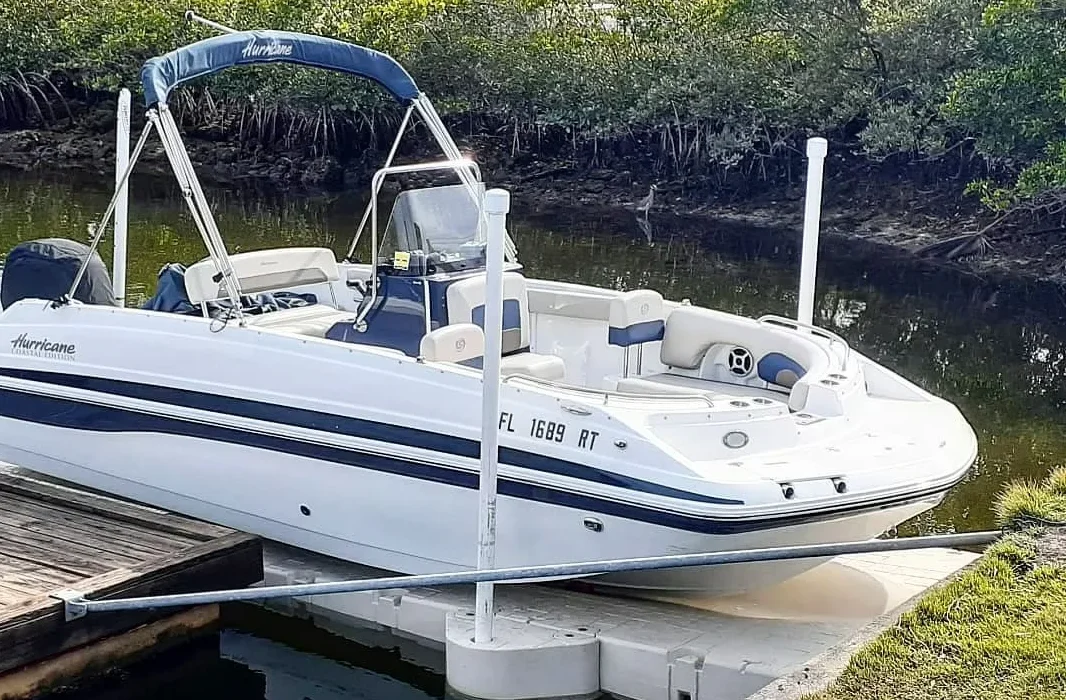
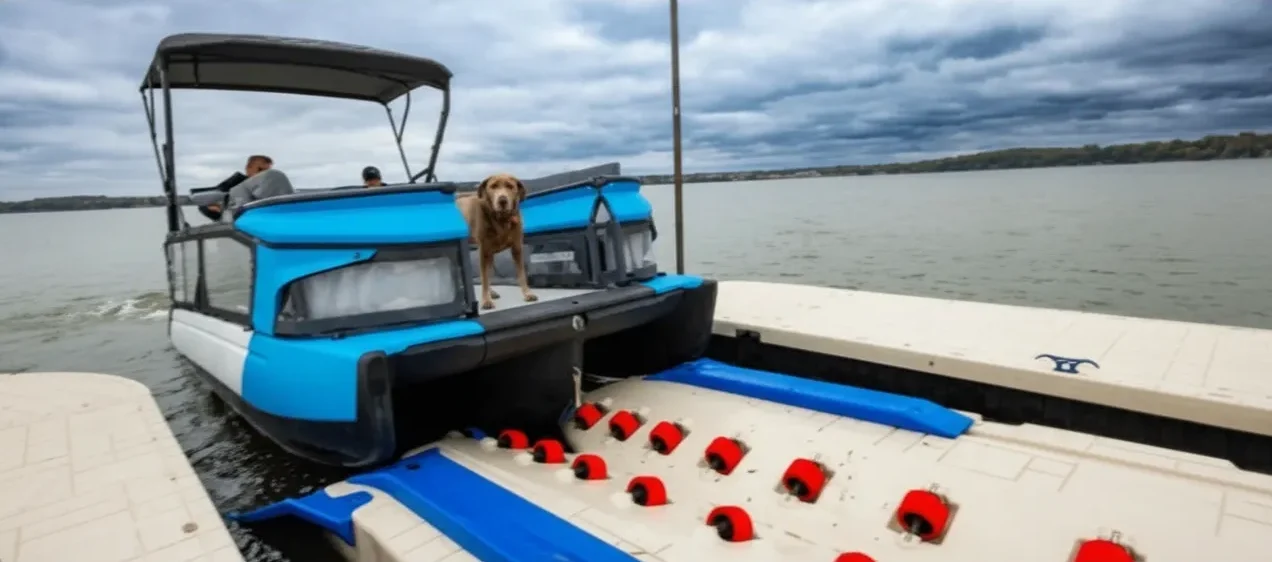
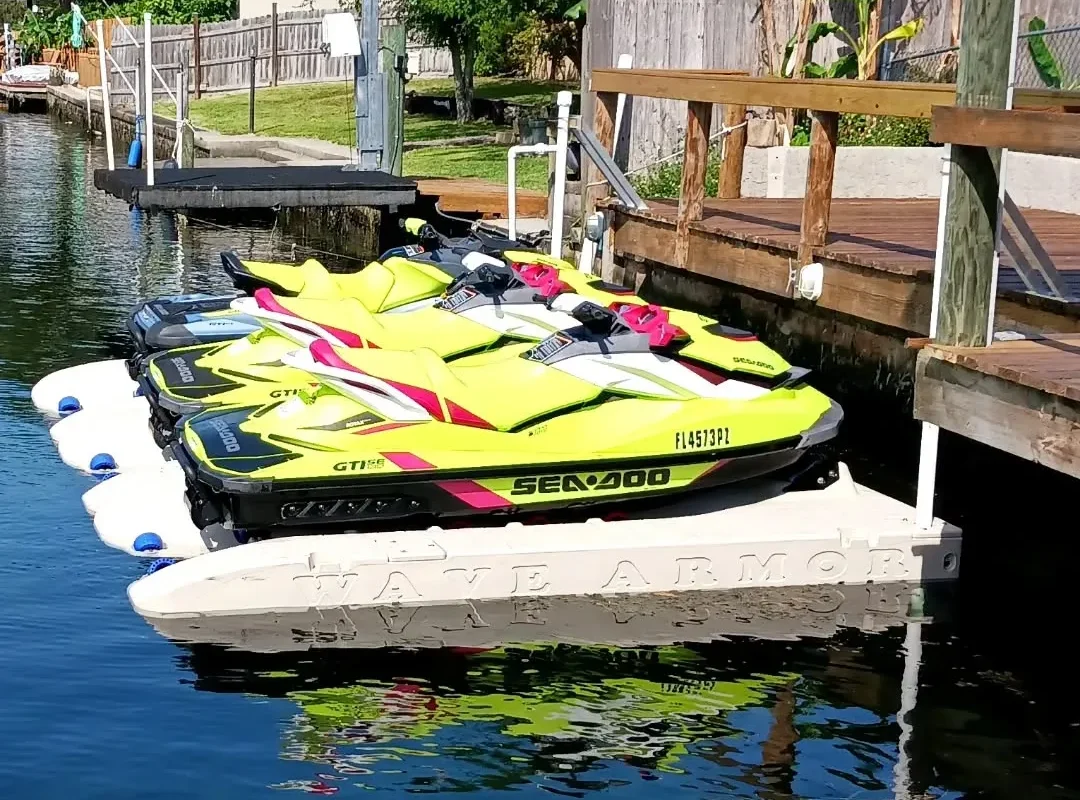
Drive‑on PWC ports use adjustable rollers, bow stops, and a buoyant cradle so you can literally drive your PWC onto the dock. That removes repeated trailer launches and saves time and effort — a real advantage for frequent riders and documented in professional dock reviews. The cradle centers and supports the hull, minimizes abrasive contact, and protects gelcoat to reduce long‑term wear and osmosis risk. Multi‑PWC setups extend this convenience to families or owners with multiple crafts. For routine use, many owners find this to be the best jet ski dock solution.
- Launch efficiency: Drive‑on ports speed every outing.
- Hull protection: Rollers and bow stops limit abrasion and fiberglass wear.
- Scalability: Multi‑PWC layouts keep several machines secure and easy to use.
With convenience and site limitations in mind, the next section highlights specific Wave Armor port features. Wave Armor PRO PORT drive‑on systems are a common pick, and MacDuff Marine, an authorized Southwest Florida dealer, sells and installs models matched to your shoreline and PWC needs to help you select the best jet ski dock.
Best Jet Ski Dock Features to Look For in a Wave Armor Port
When choosing a Wave Armor PWC port, prioritize adjustable rollers, the right length and beam fit for your PWC, UV‑stable polyethylene components, foam flotation, and corrosion‑resistant hardware. Adjustable rollers conform to different keel shapes, distribute load, protect the hull, and improve alignment during launches. Verify the port supports common Sea‑Doo, Yamaha, and Kawasaki models without bottoming out. Also check warranty terms and any Wave Armor installation services requirements — following manufacturer guidelines often keeps coverage valid. These features help you pick the best jet ski dock for your craft.
Wave Armor PRO PORT models come in sizes and roller configurations to suit different PWCs and use cases:
- Compact PRO PORT: Best for shorter recreational and single‑rider PWCs. Features an adjustable single‑roller cradle and UV‑stable polyethylene with foam flotation — ideal for calm, residential slips.
- Standard PRO PORT: Fits most Sea‑Doo, Yamaha, and Kawasaki models with a multi‑roller adjustable system and corrosion‑free fittings — built for regular use.
- Heavy‑Duty PRO PORT: Designed for larger dual‑seat or performance PWCs, with reinforced rollers, extra buoyancy, and thicker polyethylene modules — great for multi‑PWC setups and heavier craft.
This comparison helps you match model class and roller design to common PWC types. Next we review materials and design choices that extend longevity in Florida’s saltwater conditions so you get the best jet ski dock for your investment. Remember: Wave Armor products are sold through authorized dealers who verify warranty and installation compliance.
Comparing Wave Armor PRO PORT Models: Finding the Best Jet Ski Dock Size and Durability
PRO PORT models vary by size and roller layout to suit different hull shapes, balancing cradle width, keel support, and buoyancy. For the best jet ski dock, choose models with thicker, UV‑stable polyethylene panels and foam‑core flotation that hold shape under load season after season. Roller systems range from low‑friction types for easy launches to heavy‑duty sets for larger PWCs — pick according to how often you ride. Practical tips: measure your craft’s beam and keel profile, prefer adjustable rollers if you’ll swap crafts, and choose easy‑access fasteners for simpler maintenance.
- Measure your PWC’s length and beam against the port’s specs.
- Opt for adjustable rollers if you plan to use the port with different PWCs.
- Choose thicker polyethylene panels and foam flotation for rougher conditions.
Best Jet Ski Dock Materials for Florida’s Saltwater Environment
In Southwest Florida, the best jet ski dock materials withstand strong sun, salt spray, and marine growth. Look for UV‑stabilized polyethylene, foam‑filled pontoons for steady buoyancy, and stainless or similarly corrosion‑resistant fasteners. Useful design features include non‑slip decking, sacrificial bumpers to protect contact points, and modular panels you can swap individually. Corrosion‑free hardware limits galvanic action and sealed flotation chambers reduce water intrusion risk. Multi‑year warranties on select lines also signal material confidence and affect long‑term value. See our dock durability comparison for more detail.
- UV‑resistant polyethylene prevents cracking and fading under intense sun.
- Corrosion‑free fittings cut long‑term fastener maintenance.
- Modular construction reduces repair scope and lifetime costs.
With those material and design choices, professional installation preserves performance and warranty coverage. Next, we explain why professional installation is usually worth it.
Why Professional Installation is Best for Your Jet Ski Dock in Southwest Florida
Professional installation guarantees correct anchoring, alignment, and assembly so your dock performs safely through Southwest Florida’s tides, wind, and storms. A licensed installer performs a site survey, evaluates shoreline composition, recommends anchoring or piling methods, and follows Florida marine regulations and industry standards like ABYC and NAWE. Proper installation also preserves warranty coverage by using manufacturer‑approved fasteners and methods. Hiring pros saves time, reduces risk during heavy lifts or complex anchoring, and typically gives a more durable result than a DIY job — delivering a better best jet ski dock experience.
The three main advantages of professional installation are:
- Permits and compliance: Pros handle paperwork and code requirements.
- Correct anchoring: Installers size systems for tides, currents, and storms.
- Warranty validity: Certified installation helps keep manufacturer coverage intact.
What Is the Installation Process and Local Permitting Requirements?
Installation begins with a site visit and survey to measure water depth, check bottom type, assess access, and review existing dockwork — all factors that determine anchor choices and equipment. Often, permit preparation and submission are required in coastal counties and include drawings and environmental protections, which may trigger county inspections. After permits are in order, the installer mobilizes gear, sets anchors or pilings, assembles modular components, aligns the port to shore access, and completes a final operational check. Timing depends on permit cycles and site conditions, but the basic flow — site survey → permit submission → installation → inspection — is consistent. For specific Florida marine regulations, consult the FWC.
- Site survey determines anchor type and installation complexity.
- Permits vary by county and usually require drawings and site measurements.
- Final inspections confirm alignment, safe operation, and warranty compliance.
Why Choose MacDuff Marine for Expert Dock Installation and Support?
MacDuff Marine is a local, authorized Wave Armor dealer serving Southwest Florida. We offer installation and follow‑up support tailored to local conditions, often with same‑day local service for many jobs. We assemble and anchor to manufacturer standards so your warranty stays valid. Our work is backed by positive MacDuff Marine reviews and an estimate‑beat promise — we’ll beat comparable written estimates by $150. We install Wave Armor products that include multi‑year warranties on qualifying lines. For homeowners in Cape Coral and surrounding counties, our permitting and coastal experience helps projects run smoother and deliver the best jet ski dock installation.
If you want installation help or an on‑site estimate, call MacDuff Marine at (239) 872‑4300 or email [email protected] to discuss your property and needs.
Maintenance for the Best Jet Ski Dock Longevity
Our dock maintenance guide helps keep flotation reliable, limits biofouling, and prevents expensive repairs. Key tasks include rinsing salt, removing algae, inspecting rollers and fasteners, and preparing for storm season. Regular, focused maintenance slows corrosion and wear, catches loose fasteners or worn rollers early, and extends the life of both your dock and PWC so your best jet ski dock continues to perform.
Use this practical maintenance schedule as a starting point:
- Monthly: Rinse salt from surfaces and hardware after heavy use.
- Quarterly: Treat for algae and check fasteners and rollers for corrosion, looseness, and wear.
- Before Storm Season: Secure components, remove loose items, and verify anchors.
- Annually: Full inspection of flotation, structure, and alignment.
How to Protect Your Dock from Saltwater, Algae, and Weather Damage?
Rinse the dock and rollers with fresh water to remove salt and use non‑abrasive brushes to clear algae. Use corrosion‑resistant hardware and sacrificial anodes to limit galvanic action, and consider anti‑fouling coatings on lower flotation surfaces. Inspect and replace worn roller sleeves before they can damage the hull during launch. Build a storm‑prep plan that includes securing or temporarily removing modular components during hurricane season. These steps are important for maintaining the best jet ski dock in tough marine conditions.
- Rinse and remove salt after saltwater outings to slow corrosion.
- Use anti‑fouling methods and periodic mechanical cleaning to control growth.
- Replace worn rollers proactively to prevent hull damage during launches.
When and How Should You Perform Routine Cleaning and Winterization?
In Southwest Florida, storm readiness matters more than winterization. A solid routine is monthly rinses, quarterly inspections, and an annual deep check. Monthly: rinse the dock and rollers, clear debris, and spot‑check fasteners for corrosion or looseness. Quarterly: remove algae, apply anti‑fouling spot treatments, and verify roller alignment and bow stops. Annually: inspect flotation integrity, panel connections, and anchors, and finish repairs before hurricane season. Pre‑storm checklist: remove loose accessories, secure tie‑downs, or temporarily remove modular sections as needed. For the full dock maintenance guide, visit our dedicated page.
- Monthly: Rinse and visual check.
- Quarterly: Anti‑fouling and roller inspection.
- Annual: Comprehensive structural audit and storm prep.
Cost and ROI: Investing in the Best Jet Ski Dock
Cost varies with dock type, size, site complexity, and accessories — driven by the number of PWCs, anchoring method, and permitting. Return on investment comes from reduced PWC wear, easier daily use that encourages more outings, and potential property‑value gain from a well‑executed waterfront improvement. Warranties and professional installation help control long‑term costs. Multi‑PWC setups and accessories raise the upfront price but improve function and resale appeal. When budgeting for the best jet ski dock, request itemized estimates that separate equipment, site prep, permitting, and labor so you can compare accurately.
Common cost categories and what affects them:
- Floating single PWC dock: Price depends on materials, site access, and flotation required.
- Drive-on PRO PORT assembly: Varies with model, add‑ons, and whether dealer installation includes labor.
- Installation labor & anchoring: Depends on substrate, permitting, and equipment needs.
- Permitting & inspections: Costs differ by jurisdiction and permit type.
- Accessories: Add to the total based on quantity and quality chosen.
This overview shows final price depends on site specifics and choices. MacDuff Marine, your trusted jet ski dock installer Fort Myers, provides local estimates and will beat comparable written estimates by $150 — a simple way to lower your net outlay for comparable work and secure the best jet ski dock value.
What Are the Average Prices for Floating and Drive-On Jet Ski Docks?
Exact pricing depends on model, site access, and anchoring. Single floating units usually have lower baseline costs than drive‑on multi‑PWC systems, which require rollers and additional framing. Price factors include shoreline staging, required surveys and permits, and whether pilings or anchors are needed. Accessories — ramps, bumpers, upgraded decking, tie‑downs — add to the total. Get multiple itemized estimates so you can compare base equipment costs to site prep and labor and find the best jet ski dock within your budget.
- Single floating units generally have lower baseline complexity and cost.
- Drive‑on ports require more equipment and labor for rollers and alignment.
- Multi‑PWC systems scale equipment and labor but increase convenience per craft.
How Do Financing Options and Warranties Affect Your Purchase Decision?
Financing (installment plans or contractor payment terms) spreads upfront cost and makes higher‑quality or multi‑PWC systems more attainable. Warranties reduce ownership risk by covering defects and material failures; many Wave Armor products include multi‑year terms. Full warranty coverage often requires professional installation, so factor installer choice into your financing and warranty planning. Evaluate total cost of ownership by combining financing terms, expected maintenance, and warranty length to judge long‑term value instead of focusing only on the upfront price. For more, see our buyer guide on selecting the best jet ski dock.
- Financing makes higher‑spec options easier to afford.
- Longer warranties lower replacement risk and future costs.
- Authorized, warranty‑valid installation preserves coverage benefits.
Enhancing Your Best Jet Ski Dock Experience with Accessories
The right accessories boost safety, convenience, and protection for your dock and PWC, making your best jet ski dock even more useful. Common add‑ons include tie‑down systems, sacrificial bumpers, non‑slip decking, covers, and multi‑PWC spacing kits. Bumpers absorb impacts, tie‑downs secure craft in rough weather, and non‑slip surfaces reduce slip risk. Custom items — elevated walkways, integrated ladders, boarding platforms — improve usability and are often modular. Prioritize accessories that protect the hull and reduce daily friction to lower upkeep and increase safety.
Use this quick accessory checklist to prioritize purchases based on how you use your dock and local conditions:
- Tie-downs: Keep PWCs secure during storms and rough water.
- Bumpers: Protect dock edges and hulls during approaches.
- Non-slip decking: Improves safety for boarding and maintenance.
- Multi-PWC spacing kits: Ensure correct clearances and easy access.
Which Tie-Downs, Bumpers, and Multi-PWC Configurations Are Available?
Tie‑downs come as adjustable straps or ratchet systems — choose UV‑resistant straps for longevity. Bumpers are available in foam, rubber, or composite and should be placed where contact is most likely to absorb impacts. Multi‑PWC layouts preserve recommended clearances for safe access; modular kits make it simple to expand from a single unit to multiple machines. Best practice: place bumpers strategically and route straps to avoid hull rubbing so your best jet ski dock setup is safe and convenient.
- Tie-down selection: Pick UV‑stable straps with easy‑release hardware.
- Bumper placement: Protect corners and frequent contact points.
- Multi-PWC layout: Plan spacing for simultaneous access and safe retrieval.
How Can Accessories Improve Safety and Functionality?
Accessories cut damage risk, speed routine tasks, and extend equipment life by reducing friction and impact. Non‑slip decking helps prevent falls that could hurt people or gear. Functional upgrades like boarding ladders, remote locks, or quick‑release tie‑downs let one person launch safely and quickly. Proper bumpers and guides limit hull‑to‑structure contact during approach, lowering repair needs. Inspect straps, bumpers, and fasteners regularly so their safety benefits last and keep your best jet ski dock a safe, efficient platform.
- Non‑slip surfaces and ladders improve safety and reduce accidental drops.
- Quick‑release tie‑downs speed launch cycles while keeping craft secure.
- Routine accessory checks prevent small issues from becoming major failures.
MacDuff Marine can advise on accessories and provide professional installation. For an estimate or to discuss model fit and permitting, call (239) 872‑4300 or email .[email protected] We are an authorized Wave Armor PRO PORT dealer, offer a range of Wave Armor jet ski docks, provide same‑day local service for many jobs, and will beat comparable written estimates by $150. Our installations follow manufacturer warranty rules, including multi‑year coverage on qualifying Wave Armor products, helping preserve long‑term protection and value for your best jet ski dock.
Frequently Asked Questions
1. What factors should I consider when choosing a location for my jet ski dock?
Choose a location with adequate water depth, a manageable shoreline slope, and some natural protection from storms. Make sure it’s convenient for launching and meets Florida marine regulations. Consider sun exposure and prevailing winds for comfort and ongoing maintenance. A well‑chosen spot improves your best jet ski dock experience and protects your investment.
2. How can I ensure my jet ski dock is safe during storm season?
Create a storm‑readiness plan: secure or remove loose items, check anchor integrity, and be prepared to remove modular pieces if needed. Use sacrificial bumpers and inspect fasteners often. Proactive steps reduce damage risk and speed recovery after a storm, helping keep your best jet ski dock safe.
3. What are the common mistakes to avoid when installing a jet ski dock?
Don’t skimp on anchoring, skip local permits, or ignore tidal changes. Make sure shore alignment and fastenings are correct. Unless you have the right experience and equipment, DIY installation can void warranties and create safety issues; professional installation is usually the safer and more reliable choice for a best jet ski dock setup.
4. How often should I inspect my jet ski dock for maintenance?
Perform monthly visual checks (fasteners, rollers, wear), quarterly inspections for algae and component condition, and an annual deep inspection of flotation and alignment — especially before hurricane season. For a full dock maintenance guide, see our detailed recommendations to keep your best jet ski dock performing well.
5. What are the benefits of using professional installation services for my jet ski dock?
Professional installers handle permits, select the right anchoring, and follow manufacturer guidelines to ensure safety and maintain warranty coverage. They shorten install time, reduce risk, and minimize rework for a better long‑term result — delivering a proper best jet ski dock installation.
6. Can I customize my jet ski dock with additional features or accessories?
Yes. Common customizations include tie‑downs, non‑slip decking, boarding ladders, and bumpers — all of which increase convenience and protection. Choose accessories that match your usage and local conditions to get the best value and safety improvements for your best jet ski dock.
7. How do I choose the right accessories for my jet ski dock?
Match accessories to how you use the dock: tie‑downs for storm security, bumpers for impact protection, and non‑slip surfaces for safer boarding. Evaluate materials for marine durability and consult a professional or dealer for recommendations that suit your site and PWC models. For more guidance, see our buyer guide to choose the best jet ski dock accessories.