
The durability of Wave Armor jet ski docks sets the local benchmark for protecting watercraft across Southwest Florida. Boaters in Southwest Florida need a jet ski dock that stands up to relentless sun, salt, and storms. Wave Armor jet ski docks offer that durability through smart materials science and sound engineering, delivering years of reliable performance along the shorelines of Cape Coral and Fort Myers. This guide breaks down the materials behind Wave Armor’s strength, realistic lifespan expectations, the differences between SLX and Pro models, maintenance and warranty details, comparisons with traditional floating docks, and how to arrange professional installation through MacDuff Marine.
Which materials make Wave Armor jet ski docks so durable?
Wave Armor builds its docks from rotomolded polyethylene combined with UV-stabilizing additives and a fully filled foam core. That mix yields a shell that resists cracking, fading, and warping—keeping structure and buoyancy where it matters most in harsh marine environments.
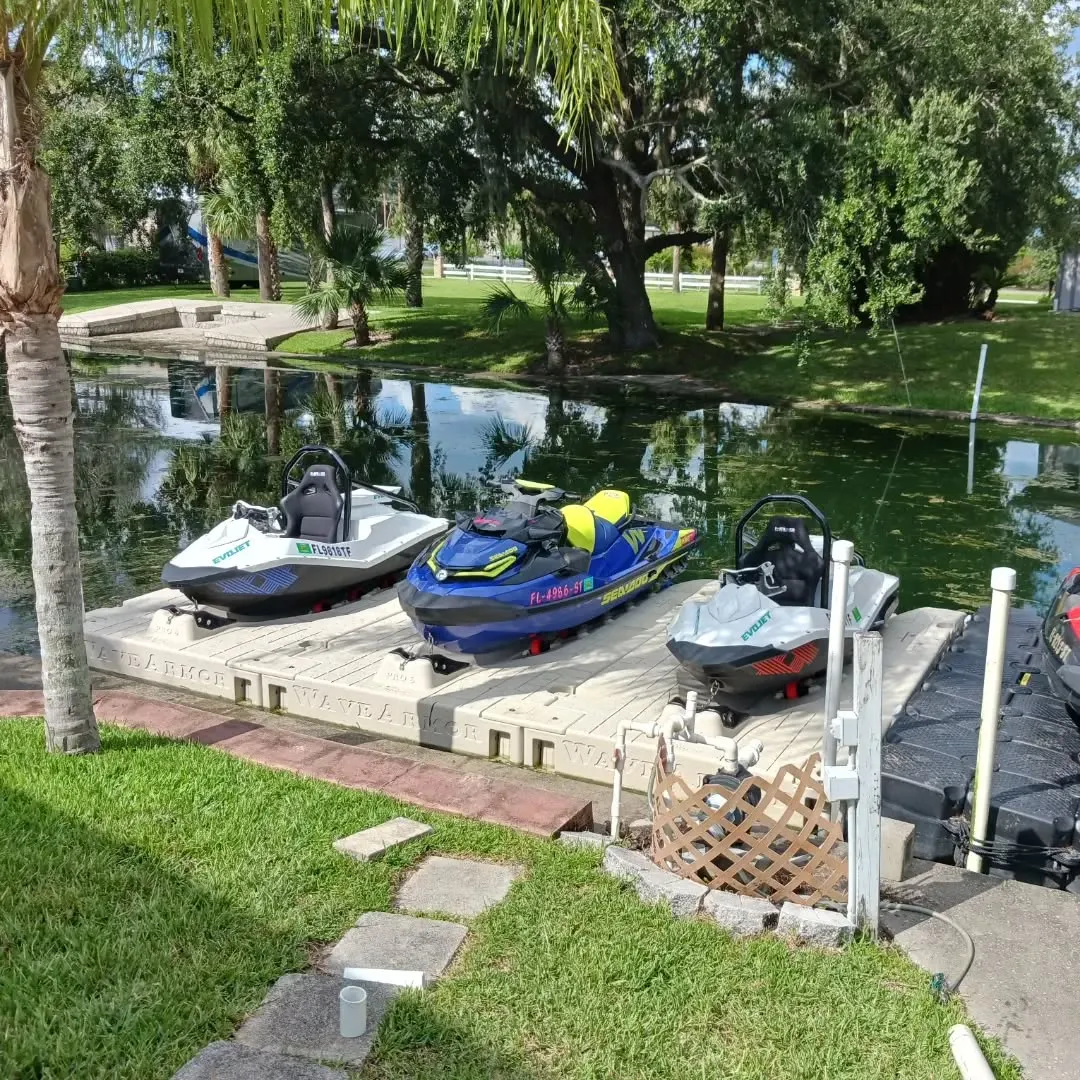
Before we dig into each feature, check out our lineup of Wave Armor PWC ports for easy drive-on/roll-off access and find the right fit for your waterfront.
Jet Ski Lifts – PWC Ports – Wave Armor – Floating Docks
Here’s a quick look at the key materials and what they do:
Rotomolded Polyethylene: A seamless, one-piece shell that stands up to impacts, abrasion, and stress cracks.
UV-Stable Additives: Protect color and polymer strength under the strong Florida sun.
Marine-Grade EPS Foam: Full core filling that ensures unsinkable buoyancy and helps absorb wave energy.
Combined, these components form the backbone of Wave Armor’s strength and longevity. Let’s take each one apart.
How Rotomolded Polyethylene Boosts Durability
Rotomolded polyethylene creates a single, monolithic shell by distributing material evenly during molding—no weld lines, no weak seams.
The result is a hull with high tensile strength, low water absorption, and strong resistance to impacts from floating debris. In practical terms, a rotomolded shell can take the load of a PWC shifting in choppy water without cracking. That manufacturing edge pairs naturally with UV protection.
UV Protection and Lasting Performance in Florida’s Sun
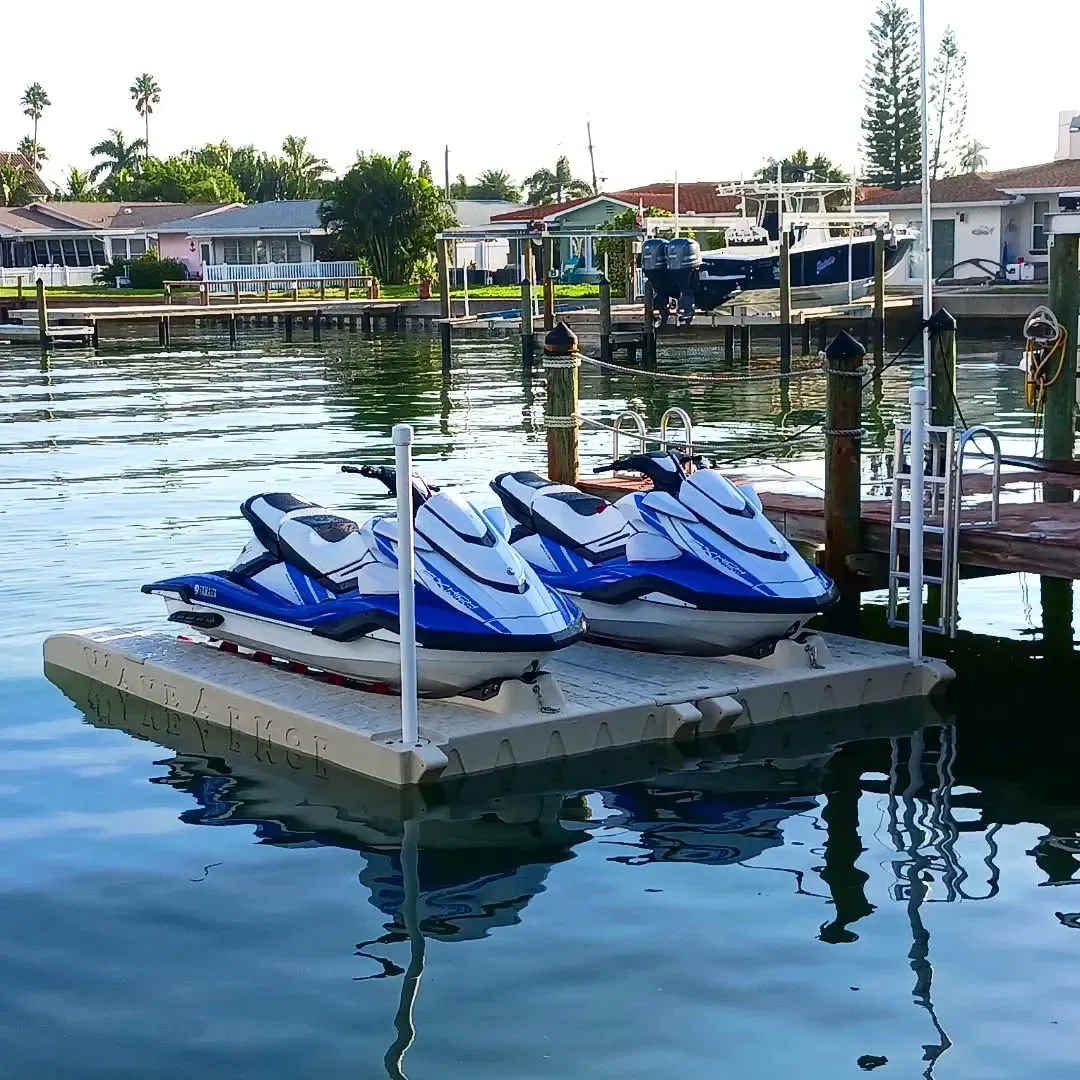
Wave Armor docks include UV-stabilizing additives that absorb and dissipate damaging ultraviolet rays. Protecting the polymer chains prevents discoloration and brittleness, keeping surfaces smooth and strong even under daily sun exposure typical of Southwest Florida’s climate. Next up: why a foam-filled core matters.
Why a Foam-Filled Design is Essential for Impact Resistance
Filling the hollow shell with marine-grade expanded polystyrene (EPS) foam gives the dock unsinkable buoyancy even if the outer shell is breached. The foam dampens wave forces, spreads loads evenly, reduces local stress, and improves impact resistance. That unsinkable core keeps performance consistent season after season and helps set realistic expectations for lifespan.
How durable are Wave Armor jet ski docks in tough marine conditions?
Wave Armor’s composite construction and industry quality standards support long-term performance that often outlasts cheaper polyethylene alternatives. With proper care, most Wave Armor jet ski docks retain structural integrity for a decade or more. Lifespan depends on environmental exposure—UV, saltwater corrosion, wave action, and extreme weather all play a role—so it helps to be realistic about expectations.
Expected Lifespan and the 8-Year Warranty
Wave Armor jet ski docks come with an 8-year limited manufacturer warranty, which reflects confidence in materials and build quality. In typical South Florida conditions, owners can reasonably expect 10–15 years of dependable service before cosmetic fading or minor wear appear. That warranty gives added peace of mind.
Performance in Storms and Hurricane-Prone Conditions
Wave Armor docks resist saltwater damage and hold their shape through temperature swings from subtropical heat to cooler fronts. The rotomolded shell stands up to debris impact, and the foam core prevents waterlogging during surge or breaches. When paired with proper anchoring, these docks have shown resilience in Category 3 and 4 hurricane events, often remaining usable once conditions calm—an important factor when comparing models.
Durability Features: SLX vs. Pro — How They Differ
Both Wave Armor SLX and Pro models use a rotomolded shell and full foam core but differ in wheel placement, hull depth, and user-focused details for various PWC sizes. The table below highlights the key durability differences.
| Series | Wheel System | Hull Depth | Puncture Resistance | Ideal Use Case |
| SLX | Exterior independent wheel pockets | Moderate (compact) | Standard rotomolded shell | Lighter PWCs, single-operator use |
| Pro | Internal recessed wheels | Deeper entry ramp | Reinforced shell thickness | Heavier PWCs, tandem watercraft |
Why the SLX Series is a Durable, Practical Option
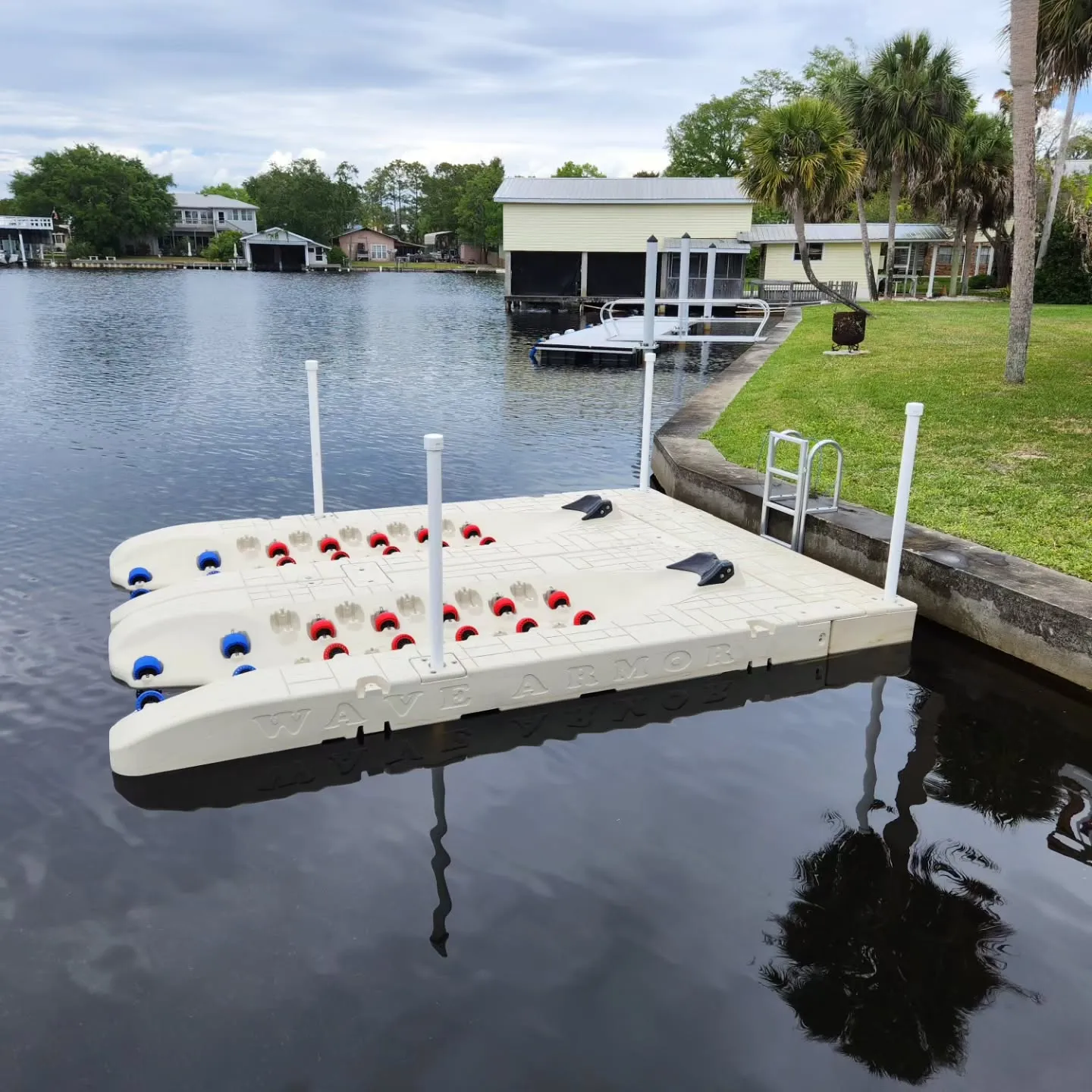
The SLX uses exterior wheel pockets to keep wheels out of the water and away from debris, cutting wear and making upkeep simpler. Its moderate hull depth gives a quick drive-on while maintaining enough material thickness for impact resistance. That balance delivers durability and everyday convenience compared with the deeper-hull Pro models.
How the Pro Series Boosts Durability for Larger PWCs
Pro docks offer a deeper-entry hull and internal wheel pockets that shield moving parts from exposure and corrosion. Thicker shell walls at the ramp spread load over a larger area, supporting heavier watercraft without concentrating stress. Those upgrades translate to longer service life under tougher use.
How Adjustable Wheels and Bow Stops Protect Your Dock and PWC
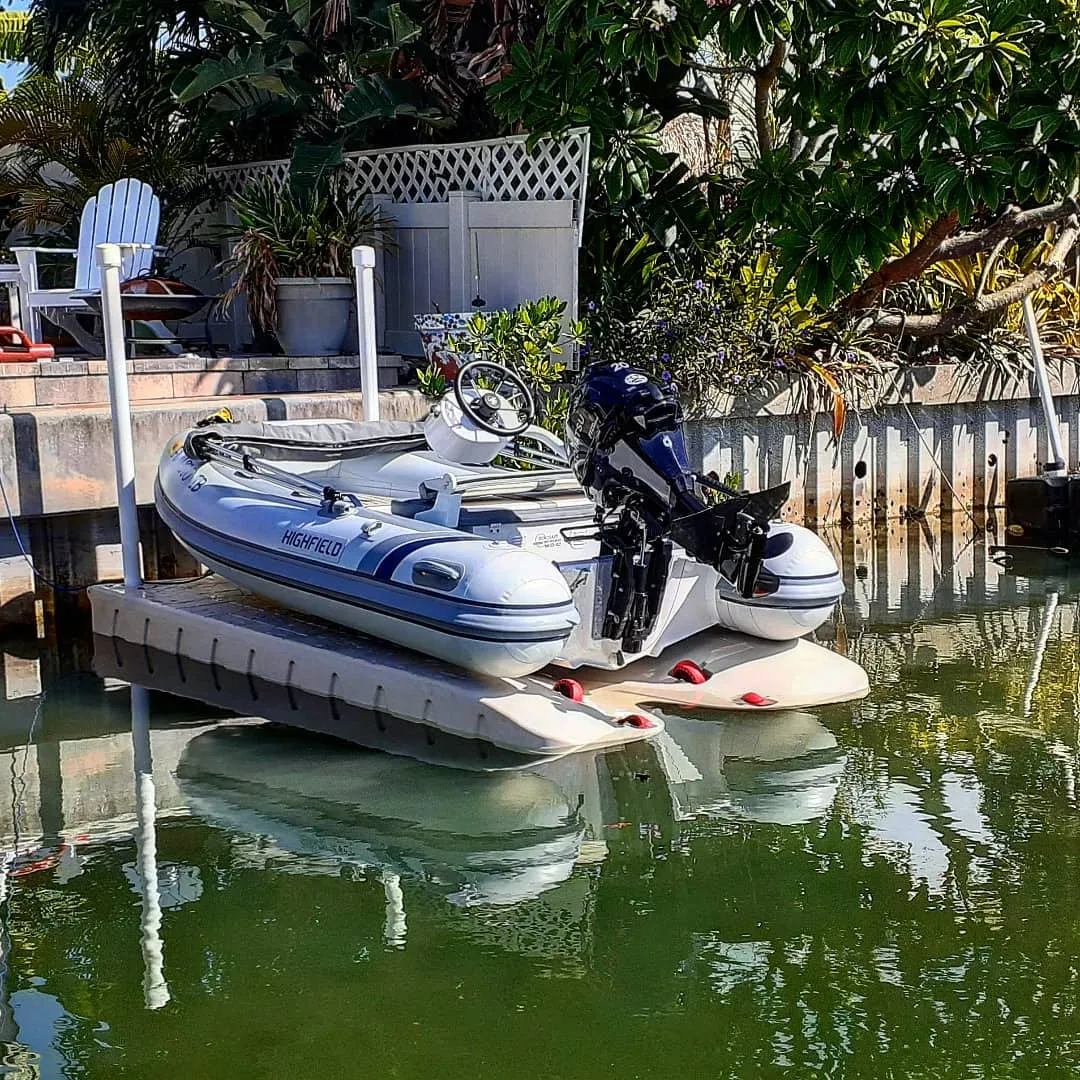
Adjustable wheels let you fine-tune leveling to cut hull-to-dock friction, reducing abrasion on both dock and PWC. Molded bow stops hold the craft in place and prevent forward impacts. By limiting movement and spreading forces, these features reduce localized wear and help preserve structural integrity.
How to Maximize Wave Armor Durability
Owners make a big difference. Regular care and timely inspections stop small issues from becoming structural concerns and help the dock reach its full lifespan.
Essential Maintenance to Keep Wave Armor Performing
Rinse the shell monthly with fresh water and mild detergent to remove salt, algae, and grime.
Quarterly, check wheel assemblies, bow stops, and anchor lines for wear—tighten or replace hardware as needed.
Before storms, secure the dock: retract wheels where applicable, verify foam integrity, and reinforce anchoring.
These steps protect materials and moving parts so your dock stays reliable year after year.
What the 8-Year Warranty Means for Durability
An 8-year limited warranty on structural and material defects shows that Wave Armor stands behind its polyethylene formulation and foam-fill process. Coverage for UV-related discoloration and cracking offers owners a tangible warranty that reflects engineered longevity.
How Wave Armor Stacks Up Against Other Jet Ski Dock Brands
Wave Armor’s high-density rotomolded shell, full foam core, and UV-stable additives distinguish it from conventional polyethylene docks that often use lower-density blends and partial filling. Those differences mean better impact resistance, lower maintenance, and longer service life under continuous marine exposure.
| Attribute | Wave Armor | Conventional Floating Docks |
| Shell Construction | Seamless rotomolded polyethylene | Welded or sectional polyethylene panels |
| Buoyancy Filling | 100% marine-grade EPS foam | Partial foam inserts or voids |
| UV Stabilization | Built-in UV-absorbing additives | Surface coatings that need reapplication |
| Warranty Coverage | 8-year limited manufacturer warranty | Typically 3–5 years limited coverage |
Why MacDuff Marine Trusts Wave Armor’s Durability
With more than 13 years installing floating docks across Lee, Charlotte, and Sarasota counties, MacDuff Marine has seen Wave Armor’s composite construction outperform traditional designs in stability, maintenance cost, and storm resilience. That on-the-water experience is the basis for our recommendation and installation preference.
Common Questions About Wave Armor Dock Durability
Boat owners commonly ask about stability, materials, and upkeep. Below are straightforward answers based on field performance and owner feedback.
How stable are Wave Armor floating jet ski docks, and what does that mean for durability? Wave Armor docks offer strong stability thanks to foam-filled buoyancy chambers and a low center of gravity. In changing water levels and choppy conditions, the pontoons and weight distribution limit rocking, making boarding and docking secure and reducing long-term wear.
What materials make Wave Armor PWC ports durable? Wave Armor PWC ports use high-density, UV-stabilized rotomolded polyethylene and are fully filled with marine-grade EPS foam. That material pairing produces a seamless, impact-resistant shell with unsinkable buoyancy and color that resists fading.
How should I maintain Wave Armor docks for maximum durability? Rinse with fresh water, use non-abrasive cleaners, inspect hardware regularly, and secure the dock ahead of storms. Prompt attention to small issues prevents salt-related corrosion, surface abrasion, and mechanical wear—and helps protect your warranty.
Follow our project gallery and updates to see examples of Wave Armor installations in action: project showcases.
How to Get a Durable Wave Armor Jet Ski Dock Installed in Southwest Florida
Installing a long-lasting Wave Armor jet ski dock starts with a professional site evaluation and precise installation by MacDuff Marine’s certified team. From consultation to final anchoring, our process is built to deliver safe, reliable performance.
Installation Services That Protect Long-Term Durability Our installation includes site survey, custom anchoring plans, dock assembly, PWC port alignment, and a final quality check. We tailor each project to local water conditions so your Wave Armor dock performs under Southwest Florida’s environmental demands.
Request an Estimate for Your Wave Armor Jet Ski Dock For pricing, timelines, and design options, request a complimentary site evaluation and quote through our portal. The estimate outlines material recommendations, anchoring plans, and a clear cost breakdown.
Request an Estimate | MacDuff Marine
For questions or to speak with our team, visit our contact page and connect with the MacDuff Marine team.
Contact MacDuff Marine | Fort Myers Boat Dock & Lift Experts
Whether you want the SLX for everyday ease or the Pro series for heavy-duty use, MacDuff Marine will help you choose and install the most durable Wave Armor jet ski dock for your waterfront.
Frequently Asked Questions
What are the key durability differences between the SLX and Pro series? The SLX and Pro series target different needs. SLX uses exterior independent wheel pockets and a moderate hull depth—great for lighter PWCs (up to 1,500–1,800 lbs) and single-operator use. The Pro series offers internal recessed wheels, a deeper entry ramp, and thicker shell walls for better puncture resistance—better suited to heavier, 3-seater PWCs and tandem craft.
How can I assess my dock’s durability and spot maintenance needs? Regular inspections are key. Look for wear on wheel assemblies, bow stops, and anchor lines, and check the shell for cracks or fading. Unusual movement or instability while docking indicates adjustments or repairs may be needed. Monthly cleaning and storm prep help prevent small problems from growing.
What should I do if my Wave Armor dock is damaged? Address damage quickly. Small surface cracks may be sealed with marine-grade products, but for major structural issues, consult a professional such as MacDuff Marine to assess and recommend repairs. Regular maintenance reduces the chance of significant damage.
Are Wave Armor docks environmentally friendly, and how does that affect durability? Yes. Wave Armor uses durable materials like rotomolded polyethylene and marine-grade EPS foam that resist degradation and reduce the need for frequent replacement. Unlike pressure-treated wood, they don’t leach chemicals like copper or arsenic into the water. Built-in UV stabilizers maintain integrity without repeated coatings—longer life means less waste and a smaller environmental footprint in marine settings.
Can I install a Wave Armor dock myself, or should I hire a pro? While experienced DIYers might install a dock, we strongly recommend professional installation. MacDuff Marine ensures correct alignment, secure anchoring, and compliance with local regulations. Professional setup helps avoid issues that can reduce durability in Southwest Florida’s unique conditions, such as improper pile spacing or insufficient tidal allowance.
What factors affect a Wave Armor dock’s lifespan? UV exposure, saltwater, wave action, extreme weather, and installation quality all influence lifespan. Routine maintenance and a quality installation tailored to your site significantly increase how long your dock will last. Proper care maximizes durability and performance.