
Keeping your aluminum boat lift clean is one of the simplest ways to protect its performance and extend service life. Aluminum won’t rust like steel, but salt, grime and electrolytic reactions can still degrade fittings and finishes over time. This guide gives straightforward, practical steps for cleaning, preventing corrosion, choosing safe cleaners, and preparing tools so you can maintain your lift with confidence. Follow these methods and your lift will stay reliable and looking good for years.
The best practices for cleaning an aluminum boat lift and preventing corrosion include:
Effective maintenance depends on regular cleaning paired with targeted corrosion control. Use the practices below to protect your lift and spot problems early:
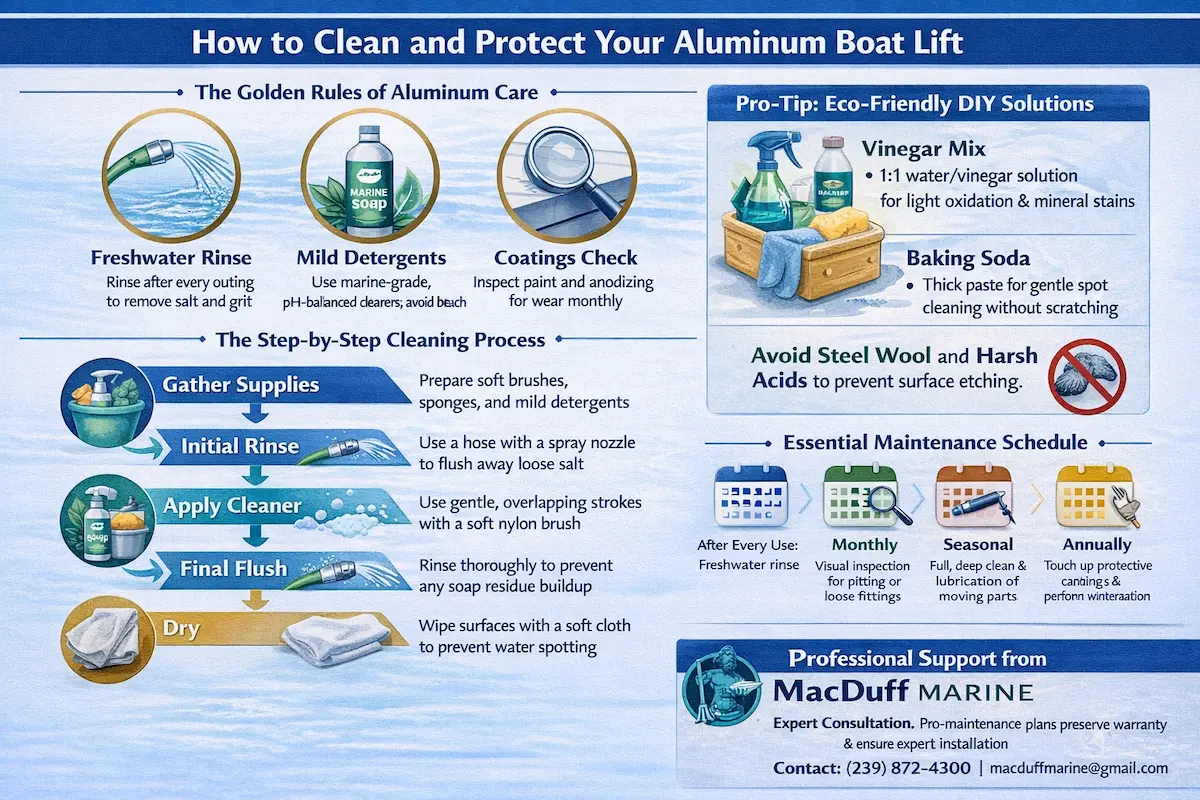
- Regular Cleaning: Rinse the lift with freshwater after every outing to remove salt, sand and grit that accelerate corrosion.
- Use Mild Detergents: Select marine‑grade, pH‑balanced detergents formulated for aluminum. Avoid harsh solvents or bleach that can remove protective finishes.
- Inspect Protective Coatings: Check paint, anodizing, sealants and other coatings for wear. Touch up or reapply as required to keep a moisture barrier intact.
Doing these tasks routinely reduces repair needs and helps the lift perform reliably over the long term.
Field studies and industry reviews also show that routine lift care lowers long‑term maintenance costs and downtime.
Aluminum Boat Lift Maintenance for Reduced Repairs
This analysis looks at whether installing and maintaining aluminum boat lifts at Coast Guard Boat Forces units pays off through reduced repair costs for boats kept out of the water. It summarizes the results from a one‑year, in‑water trial of purchased boat lifts across several units and reports the maintenance outcomes.
Cost Benefit Analysis of Aluminum Boat Lifts, 2014
Aluminum Boat Lift Maintenance Schedule
| Maintenance Task | Frequency | Purpose |
|---|---|---|
| Freshwater Rinse | After every use | Remove salt, sand and debris to prevent corrosion |
| Visual Inspection | Monthly | Check for wear, corrosion spots and loose fittings |
| Full Cleaning with Mild Detergent | Start and end of boating season | Thorough cleaning to preserve protective coatings and remove buildup |
| Protective Coating Touch-Up | Annually or as needed | Maintain moisture barrier and corrosion resistance |
| Winterization | Before winter storage | Prevent freeze damage and prepare the lift for off‑season |
| Lubrication of Moving Parts | Pre‑season and as needed | Ensure smooth operation and reduce wear |
Which Cleaning Agents Are Safe and Effective for Marine Aluminum Equipment?
Pick cleaners that remove grime without harming aluminum or the environment. Recommended options include:
- Mild Marine‑Grade Detergents: Designed for boats and marine gear, these remove oil, salt and grime while remaining safe for aluminum.
- Vinegar Solution: A diluted white vinegar mix can lift light oxidation and mineral stains without harsh chemicals.
- Baking Soda Paste: For spot cleaning, a baking soda and water paste provides gentle abrasive action without scratching.
Avoid strong acids, caustic alkalis and abrasive powders that can etch or weaken aluminum surfaces.
How to Prepare and Use Tools for Optimal Cleaning Results
The right tools and a little prep work prevent damage and make the job faster. Before you start:
- Select Appropriate Tools: Use soft nylon brushes, non‑abrasive sponges and plastic scrapers. Never use steel wool or metal scouring pads.
- Check Tool Condition: Inspect brushes and sponges for trapped grit; replace or clean them so you don’t scratch the surface.
- Use a Hose with a Spray Nozzle: A nozzle gives control over pressure and flow for safe, effective rinsing.
Good tools make cleaning easier and reduce the risk of surface damage.
How Can You Prevent Corrosion on Aluminum Boat Lifts?
Preventive measures are the most effective way to keep corrosion at bay. Focus on material selection, protection and frequent inspection:
- Use Marine‑Grade Aluminum: When replacing parts, specify marine‑grade alloys built to resist saltwater exposure.
- Apply Protective Coatings: Keep anodizing, paint or sealants in good condition to maintain a barrier against moisture and contaminants.
- Conduct Regular Maintenance Checks: Inspect fittings, welds and joints for early signs of pitting, discoloration or galvanic attack and address issues promptly.
These habits help preserve structural integrity and reduce unexpected failures.
What Are the Best Corrosion Prevention Techniques for Marine-Grade Aluminum?
Combine targeted protection with routine care for the best results:
- Anodizing: Enhancing the natural oxide layer improves corrosion resistance and surface hardness.
- Regular Cleaning: Frequent freshwater rinses remove salts and biological growth that speed corrosion.
- Avoid Contact with Dissimilar Metals: Prevent galvanic corrosion by insulating aluminum from copper, brass or unprotected steel where possible.
These techniques preserve both appearance and performance in marine environments.
Long‑term tests across climates have shaped best practices for protecting aluminum alloys from seawater corrosion.
Marine Corrosion Protection for Aluminum Alloys
Long‑term seawater tests of aluminum alloys across climatic zones — from Arctic to tropical environments — show typical corrosion behaviors. The study reviews protective methods for these alloys and notes that anodic and cathodic approaches differ for aluminum compared with carbon steel.
Marine corrosion and protection of aluminum alloys according to their composition and structure, 2005
How Do Protective Coatings Enhance Aluminum Boat Lift Durability?
Coatings provide multiple layers of defense that extend service life:
- Corrosion Resistance: Coatings keep moisture and salt from reaching bare metal.
- Surface Protection: They limit wear from abrasion and contact damage.
- UV Protection: Many finishes include UV stabilizers to slow sun‑related degradation.
Applying and maintaining the right coating is a cost‑effective way to protect your lift.
Which Products Are Recommended for Aluminum Boat Lift Maintenance?
Use durable parts and hardware to improve safety and longevity:
- Heavy‑Duty Stainless Steel Cables: Properly rated, corrosion‑resistant cables deliver reliable lifting strength.
- Sealed Bearings in Pulleys: Sealed bearings limit moisture ingress and reduce maintenance frequency.
- Aluminum Bunks: Correctly sized and installed aluminum bunks support the hull and reduce stress during lifting.
Investing in quality components lowers downtime and repair costs.
What Are the Benefits of Biodegradable and Eco-Friendly Cleaners?
Choosing greener cleaners protects waterways and people without sacrificing cleaning power:
- Reduced Chemical Leaching: Biodegradable formulas minimize toxic runoff into marine environments.
- Non‑Toxic Materials: Safer ingredients lower risks to handlers and wildlife.
- Sustainability: Using environmentally responsible products supports long‑term stewardship of local waters.
Eco‑friendly cleaners can be effective and gentler on the environment when matched to the task.
Researchers continue to develop aqueous and biodegradable cleaners that clean metals without unacceptable degradation.
Eco-Friendly Cleaners & Metal Compatibility
Recent efforts have evaluated environmentally acceptable alternatives to traditional ODC cleaners. This study examines whether aqueous cleaners can replace ODCs without causing harmful metal degradation. It stresses that cleaner selection must match the specific metal and provides compatibility criteria and tables for safe metal‑cleaner pairings.
Metal-Detergent
How to Choose the Right Cleaning Products for Aluminum Boat Lift Based on Environmental Considerations
When selecting products, prioritize safety and documented compatibility:
- Evaluating Product Ingredients: Read labels for non‑toxic, biodegradable ingredients and avoid persistent, bioaccumulative chemicals.
- Understanding Environmental Impact: Check manufacturer documentation and independent reviews for environmental claims and disposal guidance.
- Choosing Certified Products: Look for third‑party eco certifications or biodegradability claims backed by testing.
Smart product choices protect both your lift and the surrounding waters.
When and How Often Should You Perform Maintenance on Your Aluminum Boat Lift?
A regular maintenance rhythm keeps small issues from becoming major repairs. Use this schedule as a baseline:
- Seasonal Maintenance: Perform full inspections and cleanings at the start and end of each boating season.
- Monthly Checks: Do a quick monthly inspection for wear, corrosion spots and loose fittings.
- Post‑Use Maintenance: Rinse the lift with freshwater after each use to remove salt and surface debris.
Adjust frequency for local conditions and heavy use to stay ahead of wear and corrosion.
What Are Seasonal Maintenance Tips for Aluminum Boat Lifts?
Seasonal attention helps your lift withstand weather extremes and storage periods:
- Winterization Steps: Clear debris, drain trapped water and protect moving parts to prevent freeze damage.
- Pre‑Summer Checks: Inspect fasteners, verify protective coatings and lubricate moving parts before heavy use.
- Post‑Season Inspections: Clean thoroughly and document any repairs needed before storage.
Seasonal preparation reduces the chance of weather‑related failures and speeds spring commissioning.
How to Establish a Regular Cleaning f and Inspection Schedule
Create a simple system so maintenance stays consistent:
- Identifying Equipment: List every component—frame, cables, pulleys, bunking systems and fasteners—that needs inspection.
- Setting Reminders: Use a calendar, phone alerts or maintenance software to schedule checks and cleanings.
- Documenting Findings: Keep a log of inspections, dates and actions taken so trends and recurring issues are easy to spot.
A documented routine simplifies upkeep and supports warranty or repair claims when needed.
What Are Common Issues Encountered During Aluminum Boat Lift Cleaning and How to Troubleshoot Them?
These common problems are fixable when identified early:
- Oxidation Buildup: Treat light oxidation with mild acid solutions or abrasives formulated for aluminum, then rinse and protect the surface.
- Stubborn Stains: Use a marine‑grade aluminum cleaner or a targeted poultice for persistent stains; always test in a small area first.
- Scratches from Tools: Move to softer brushes and clean tools before use to remove embedded grit that causes scratches.
Tackling issues promptly prevents escalation and higher repair costs.
How to Remove Oxidation and Stubborn Stains Effectively?
Match the method to the severity of the problem:
- Vinegar Solution: Apply a 1:1 vinegar and water mix to oxidized spots, let it sit briefly, scrub gently and rinse.
- Baking Soda Paste: For spot cleaning, apply a baking soda paste, allow it to work, then scrub and rinse to lift stains.
- Commercial Aluminum Cleaners: For heavy oxidation, use a marine‑rated aluminum cleaner per product instructions and rinse thoroughly.
Finish by drying the area and reapplying any protective coatings as needed.
What Are the Best Practices to Avoid Damage During Cleaning Aluminum Boat lifts?
Protect metal and hardware by using careful technique:
- Regular Rinsing: Rinse before and after cleaning to remove grit that can scratch surfaces.
- Using Mild Detergents: Stick to gentle, marine‑safe cleaners to preserve finishes and seals.
- Quarterly Inspections: Inspect every few months to catch corrosion or wear before it becomes structural.
Consistent, gentle care keeps your lift functioning and helps avoid unnecessary replacements.
Expert Advice and Quality Products for Your Aluminum Boat Lift
If you need professional guidance on selecting the right cleaners or want to ensure your aluminum boat lift is maintained to the highest standards, MacDuff Marine is here to help. We specialize in marine-grade solutions tailored to protect your equipment from harsh environments.
Contact MacDuff Marine
Phone: (239) 872-4300
Email: [email protected]
The MacDuff Marine Advantage
Consulting with professionals can prevent costly DIY mistakes and ensure your lift remains under warranty. MacDuff Marine provides:
Professional Maintenance Plans: Tailored cleaning and inspection schedules based on your specific location and usage.
Quality Marine Hardware: Access to heavy-duty stainless steel cables and sealed bearings to upgrade your lift’s durability.
Expert Installation: Ensuring your lift is set up correctly from the start to reduce long-term wear.
How to Request an Estimate
To get an accurate estimate for maintenance services or to purchase recommended marine-grade cleaning supplies, contact MacDuff Marine with your lift type and usage details.