
Choosing a boat lift starts with one question that sounds simple: how much does the boat weigh? The real answer is more involved. The lift has to support the boat as it is actually used, not just the dry weight printed in a brochure.
Fuel, batteries, engines, water, live wells, electronics, trolling motors, towers and gear can all change the weight the lift needs to handle. Then the waterfront itself matters. Water depth, pilings, seawall conditions, dock access and the way the boat approaches the lift can influence the final configuration.
MacDuff Marine installs QABL aluminum boat lifts across Southwest Florida. This guide explains the main factors homeowners should understand before requesting a lift quote.
What Size Boat Lift Do You Need?
Do not choose a lift from boat length alone and do not rely only on the manufacturer's published dry weight.
The better starting point is the boat's wet-rigged operating weight. That means considering the vessel with the equipment and fluids it normally carries.
Start With the Boat
Confirm the exact make, model, year, hull configuration and engine package rather than estimating from length alone.
Add What the Boat Carries
Fuel, batteries, water, live wells, gear, electronics, trolling motors, towers and other installed equipment all contribute to actual lifting weight.
Match the Lift to the Site
Capacity is only part of the decision. The finished lift also has to work with the dock, pilings, seawall, water depth and boat approach.
Calculate the Boat as It Is Actually Used
Two boats with similar hull lengths can require very different lifts. Engine packages alone can create a major difference, especially when comparing single-engine and multiple-engine center consoles.
A proper lift discussion should account for more than the hull.
- Hull and factory-installed equipment
- Outboard or inboard engine weight
- Fuel normally carried
- Freshwater and live-well capacity
- Batteries and chargers
- Trolling motors
- Hardtops, towers and radar equipment
- Fishing, cruising and safety gear
- Other permanently installed accessories
When requesting a quote, providing the exact boat model and engine configuration gives MacDuff Marine a much better starting point than simply saying, for example, "24-foot center console."
Boat Lift Capacity Starting Points
The following ranges are useful for understanding the general scale of lift a waterfront project may involve. They are planning references, not final specifications.
| Boat Type | Typical Length | Starting Capacity Range |
|---|---|---|
| Jet Ski / PWC | 10 to 13 ft | 1,500 to 2,500 lbs, or a Wave Armor PWC port |
| Center Console / Bay Boat | 18 to 24 ft | 6,000 to 10,000 lbs |
| Pontoon | 20 to 24 ft | 7,000 to 12,000 lbs |
| Cruiser / Express | 26 to 32 ft | 13,000 to 24,000 lbs |
| Larger Vessel | 32+ ft | 24,000 to 40,000+ lbs |
These are MacDuff Marine planning ranges. Final lift capacity depends on actual wet-rigged weight, boat configuration, lift model and site conditions.
Why the 12,000 lb Lift Comes Up So Often
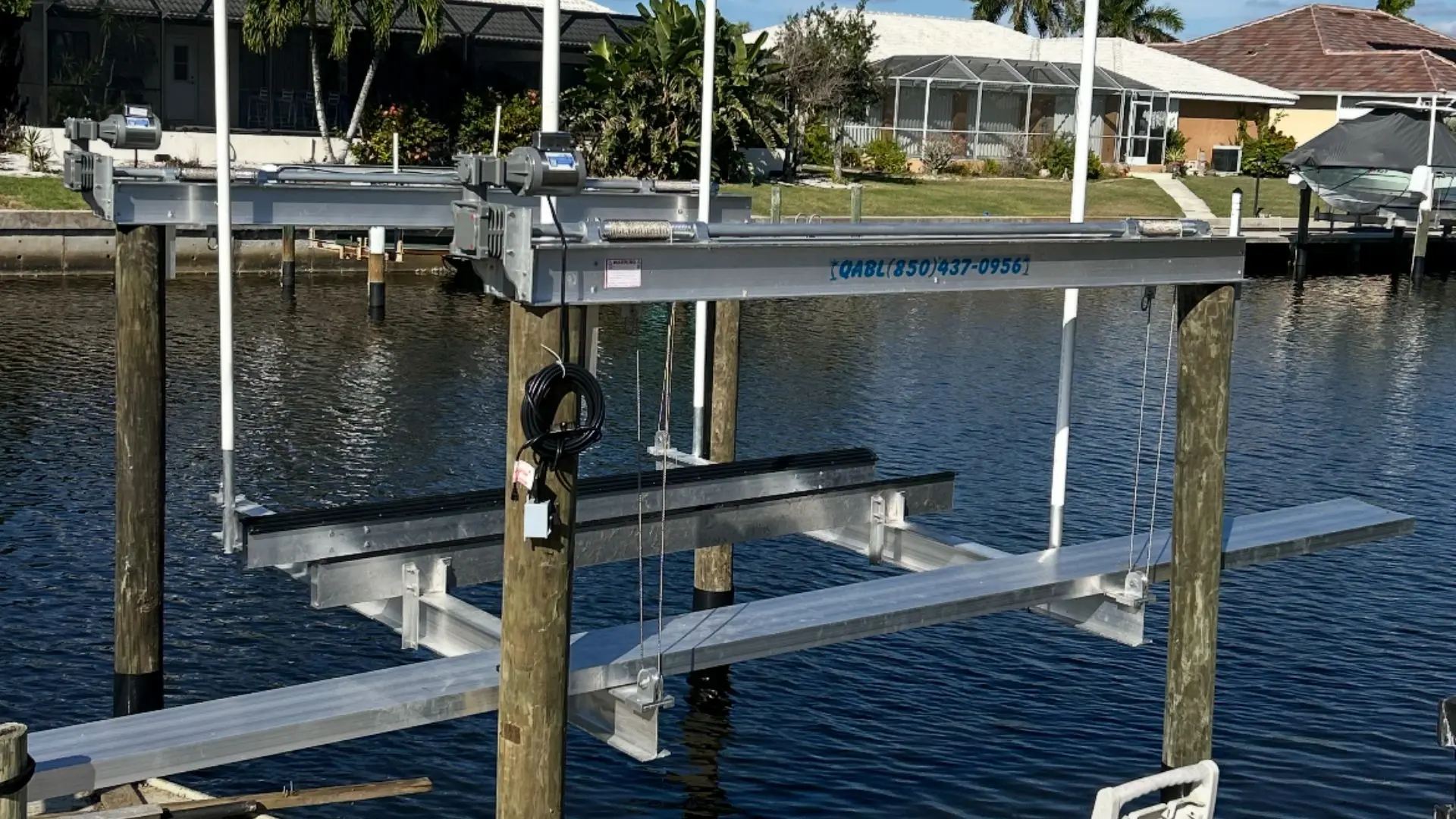
A 12,000 lb four-post aluminum cradle lift is a common starting point for many Southwest Florida waterfront projects involving center consoles, bay boats and deck boats in roughly the 22 to 26 foot range.
That does not mean every 22 to 26 foot boat belongs on a 12,000 lb lift. A heavily equipped offshore center console with multiple engines can weigh dramatically more than a lighter bay boat of similar length.
The boat's actual configuration always comes first.
Material Matters Around Florida Saltwater
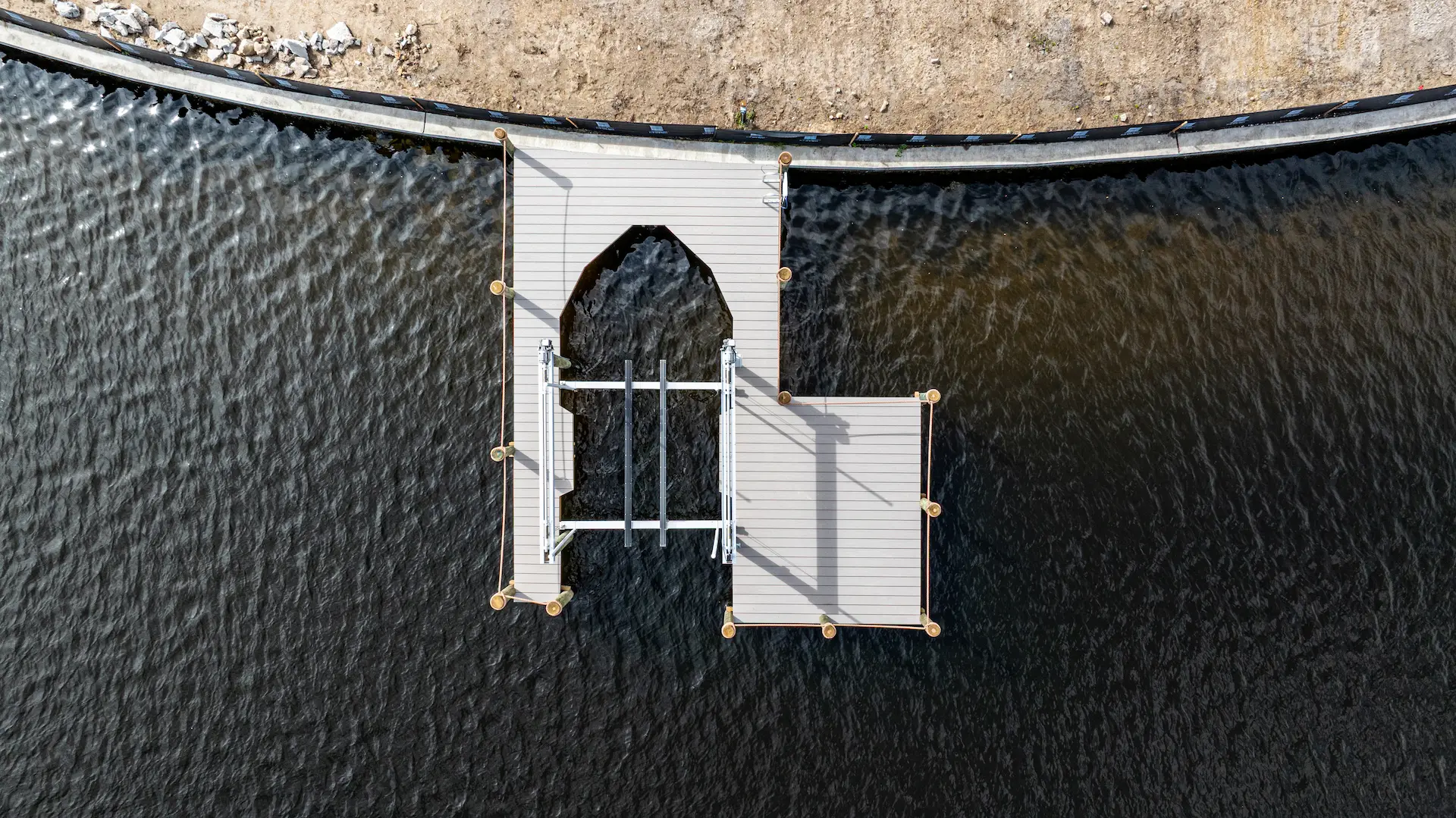
Boat lifts installed along Southwest Florida canals, rivers and coastal waterways live in a demanding environment. Saltwater exposure makes material selection especially important.
Quality Aluminum Boat Lifts uses 6061-T6 marine-grade aluminum with stainless steel hardware on its aluminum lift structures. Its current Top Mount and Side Mount specifications also identify stainless steel cables and hardware.
That construction is one of the main reasons MacDuff Marine uses QABL for Florida waterfront lift projects.
- 6061-T6 marine-grade aluminum structure
- Stainless steel cables and hardware on applicable models
- Aluminum structural components instead of a steel lift frame
- Configurations designed specifically for marine lifting applications
Review the QABL Top Mount specifications directly from the manufacturer.
The Waterfront Can Change Which Lift Configuration Makes Sense
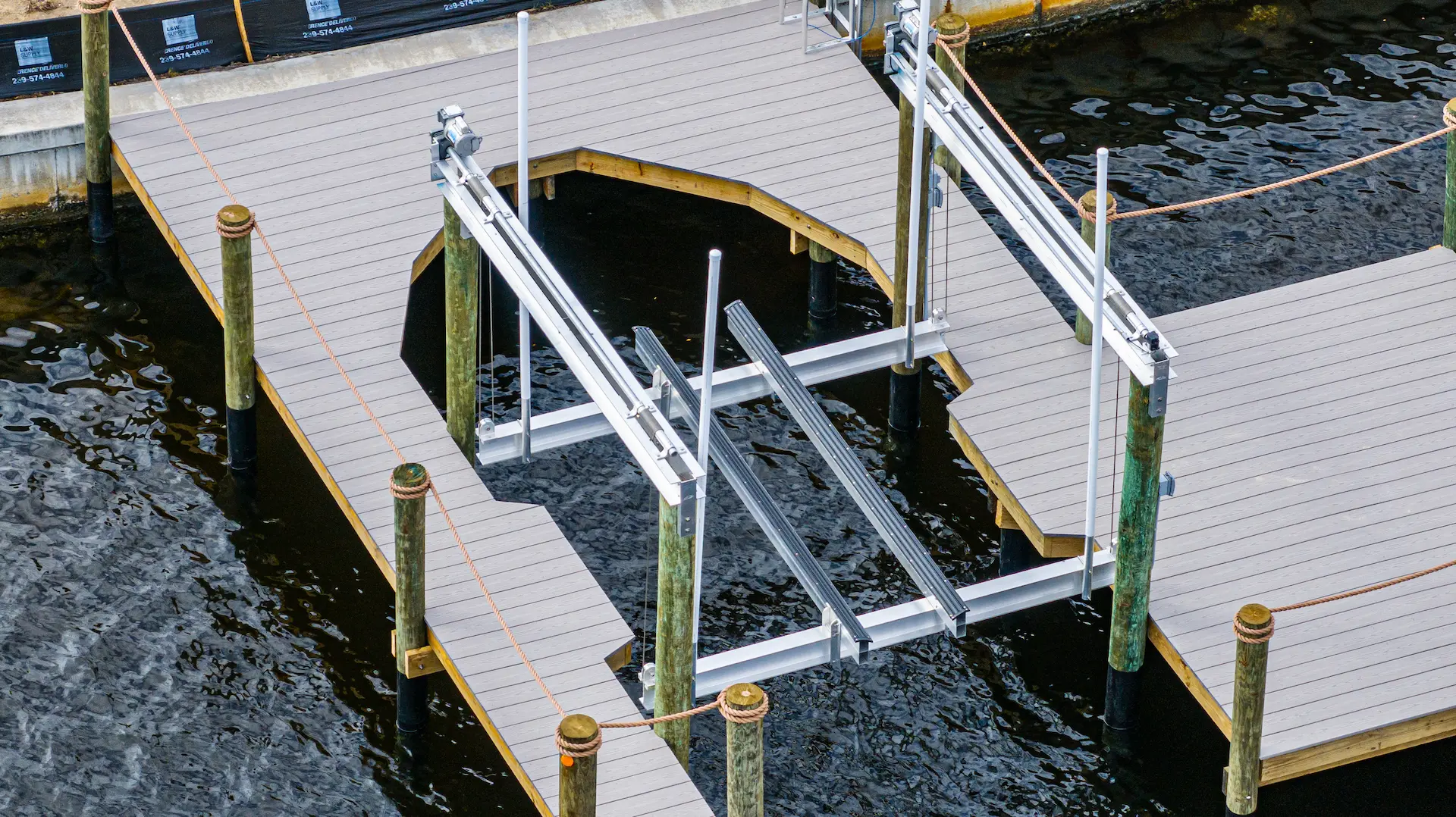
A lift does not exist separately from the dock and waterway. Before a final system is selected, the property needs to be considered too.
Water Depth
The lift needs enough usable water depth for the boat to enter, settle into position and clear the lift components during normal operation.
Pilings and Structure
Existing pilings, dock construction and seawall conditions help determine how the lift can be positioned and what supporting work may be required.
Boat Approach
The boat has to be able to approach and leave the lift cleanly. Canal width, neighboring docks and the available turning area can matter.
Water Movement
Current, wake activity and changing water levels should be considered when evaluating the layout and how the boat will use the lift.
Dock Access
Walking access, boarding position and equipment placement should be planned so the lift works with the waterfront rather than blocking normal dock use.
Future Boat Plans
If a larger or heavier boat is realistically coming soon, discuss that before installing a system around today's boat alone.
Boat Lift Configuration Is More Than Capacity
Capacity tells you how much weight a lift is designed to handle. Configuration determines how that lifting system works with the boat and property.
QABL manufactures several types of aluminum and stainless boat lifts. Its product lineup includes Top Mount and Side Mount lifts, Beamless lifts, Boat House lifts, lake lifts, elevator lifts and PWC configurations.
MacDuff Marine's most common Southwest Florida conversations involve aluminum cradle-style systems, but the final recommendation depends on the boat and waterfront rather than forcing every customer into one lift type.
See the Quality Aluminum Boat Lifts manufacturer website for its current product lineup.
The Lift Has to Support the Boat Correctly, Not Just Lift the Weight
Capacity gets most of the attention, but the boat also needs to sit correctly on the lift.
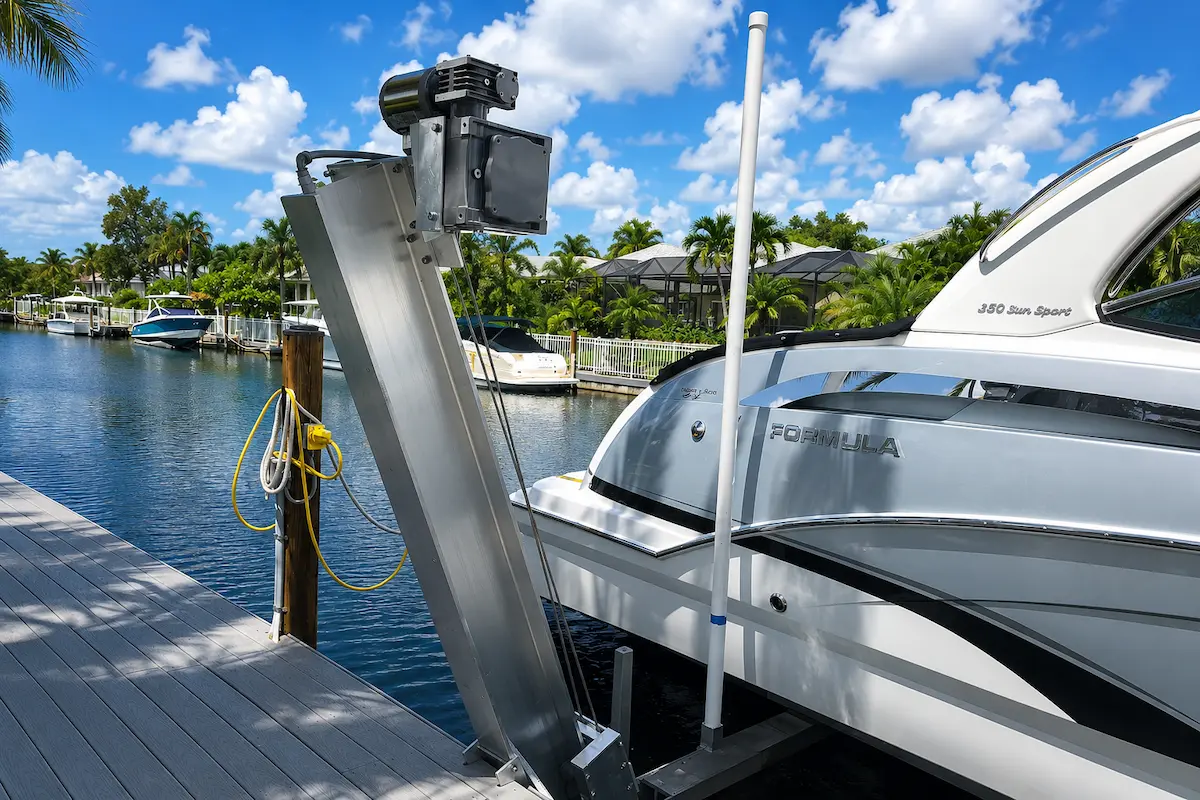
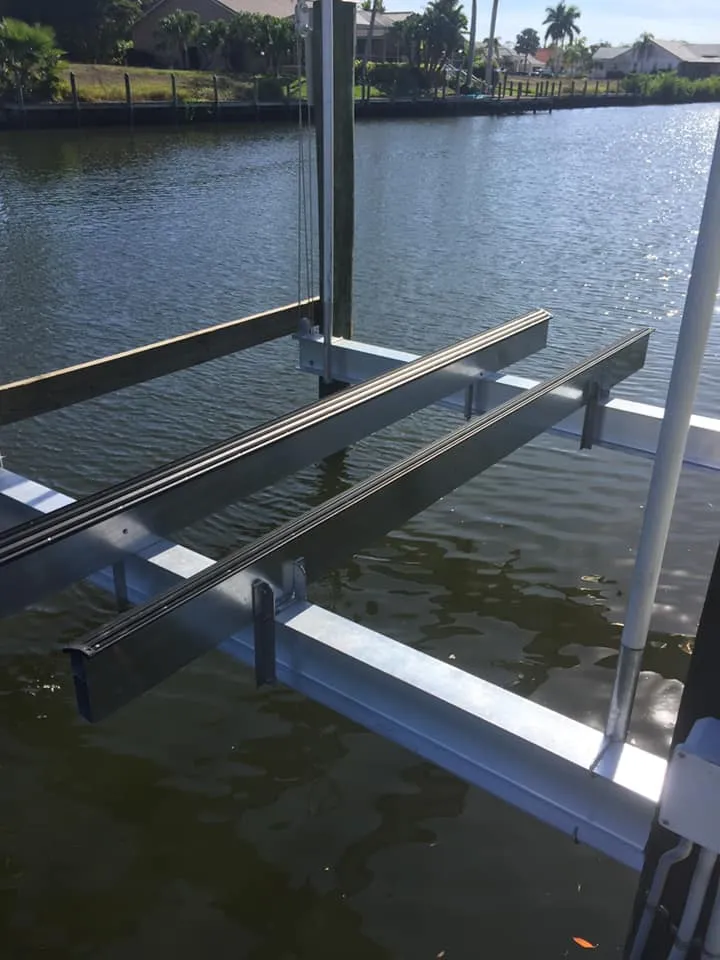
Hull shape, beam, engine configuration and underwater features influence how the bunks and supporting components should be positioned. The goal is to support the boat where the particular hull is designed to be supported while maintaining appropriate clearance for engines and other components.
This is another reason the exact make, model and engine package should be supplied before the system is quoted.
Photos of the existing waterfront are also helpful. If an old lift is being replaced, photos of that system can give MacDuff Marine useful context before the site review.
What Is the Warranty on a QABL Boat Lift?
Warranty language needs to be tied to the exact QABL model rather than reducing every component of every lift to one number.
For example, QABL's current Top Mount / Side Mount product page lists:
Structural Warranty
QABL currently lists a 15-year structural warranty for its Top Mount / Side Mount system.
Hoist Warranty
The current Top Mount / Side Mount specification lists a 10-year hoist warranty.
Electrical Warranty
The same manufacturer page currently lists a 2-year electrical warranty.
QABL also lists a 1-year comprehensive warranty for that system. Because warranty coverage can vary by product and component, MacDuff Marine confirms the applicable manufacturer terms for the exact lift being quoted.
Review the current QABL Top Mount / Side Mount specifications for manufacturer-published information.
Plan the Boat Lift and Dock as One Waterfront
Sometimes the lift is the entire project. Other times the homeowner is also replacing or expanding the dock.
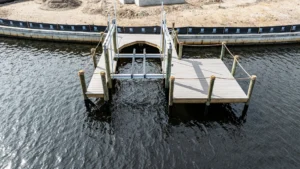
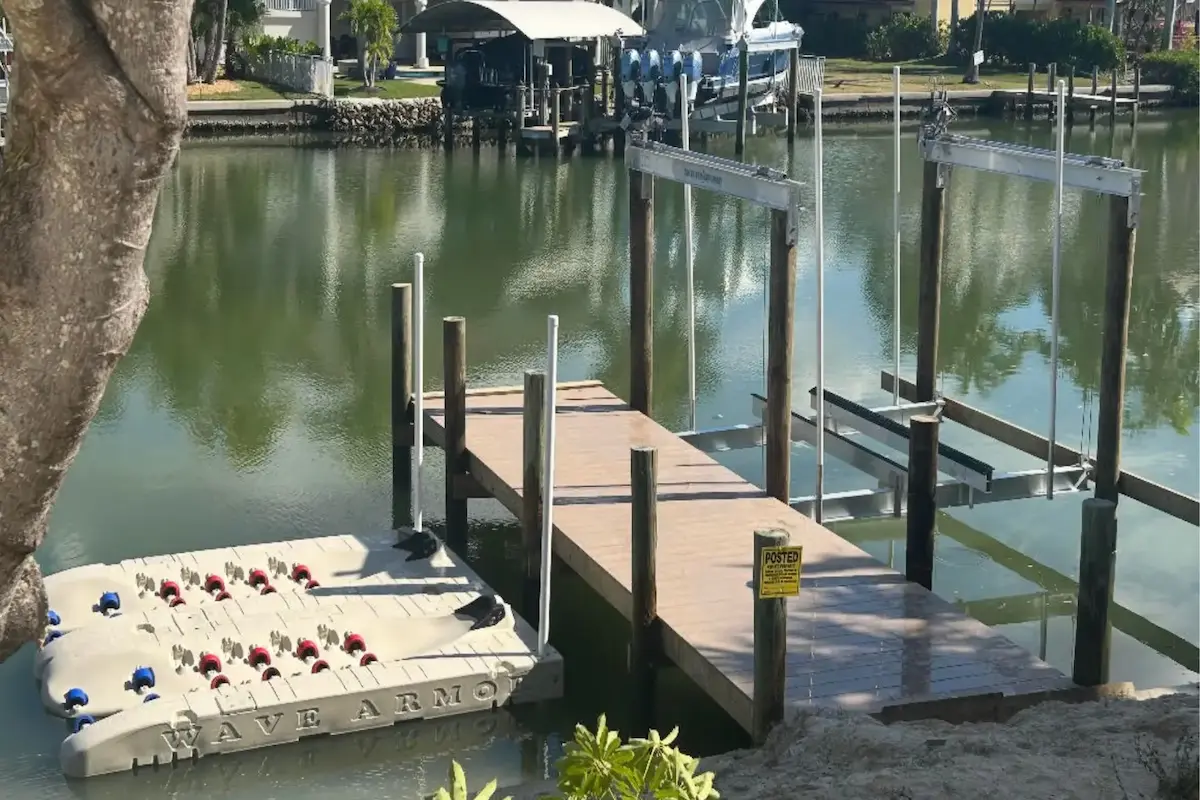
In those projects, it makes sense to consider the lift, boarding area, walking paths, PWC storage and water-level access together before construction begins.
QABL Boat Lift
Supports the vessel out of the water and is sized around the boat, lift configuration and property.
Wave Armor Floating Dock
Provides modular waterfront access that can include walking surfaces, PWC ports, kayak access and other configurations.
What Information Should You Send Before Requesting a Boat Lift Estimate?
The more accurately the boat and property are identified at the beginning, the easier it is to narrow down the correct lift.
- Property location
- Boat manufacturer and model
- Boat model year
- Exact engine configuration
- Known factory weight information
- Major installed accessories
- Photos of the existing dock, seawall or lift
- Whether the existing lift is staying or being replaced
- Any future boat change already being considered
MacDuff Marine currently offers a written-estimate guarantee. Bring a written estimate from a licensed Florida marine contractor for equivalent equipment and MacDuff Marine will beat the bottom line by $150.
Why MacDuff Marine Uses QABL Aluminum Boat Lifts
MacDuff Marine is the exclusive Florida dealer for Quality Aluminum Boat Lifts and has more than 15 years of waterfront installation experience in Southwest Florida.
QABL's aluminum and stainless construction is a strong fit for the saltwater environment MacDuff Marine works in every day. More importantly, the product line offers multiple configurations and capacities so the lift can be selected around the boat instead of trying to make one standard package fit every property.
MacDuff Marine installs across Cape Coral, Fort Myers, North Fort Myers, Port Charlotte, Punta Gorda and the broader Southwest Florida service area .
You can also view recent waterfront projects and read customer reviews before requesting an estimate.
Common Questions About Choosing a Boat Lift
What size boat lift do I need?
Lift size should be based on the boat's actual wet-rigged weight and configuration, not length or dry hull weight alone. Engines, fuel, batteries, water, live wells, electronics, towers and other equipment can all contribute to the weight the lift needs to support.
Can I size a boat lift from the manufacturer's dry weight?
Dry weight is a useful starting point, but it does not represent everything normally carried by the boat. MacDuff Marine considers the boat as it will actually be configured and used before recommending a final lift capacity.
Is a 12,000 lb boat lift enough for a 24-foot boat?
It may be appropriate for some 24-foot boats and not for others. A 24-foot bay boat with a lighter engine package can weigh substantially less than a heavily equipped offshore center console of similar length. The exact boat and operating weight need to be checked.
Why choose an aluminum boat lift in Florida?
Southwest Florida lift systems are exposed to demanding marine environments. QABL builds its aluminum lift structures using 6061-T6 marine-grade aluminum and stainless hardware, making that construction well suited to waterfront applications where corrosion resistance matters.
What capacities are available for QABL Top Mount lifts?
QABL currently lists 6K, 10K, 12K, 16K and 20K capacities for its Top Mount / Side Mount lift system. QABL also manufactures other lift types with their own specifications and capacities.
What is the warranty on a QABL boat lift?
Warranty coverage depends on the model and component. QABL's current Top Mount / Side Mount page lists a 15-year structural warranty, 10-year hoist warranty, 2-year electrical warranty and 1-year comprehensive warranty. MacDuff Marine confirms the current terms for the exact lift being quoted.
Can a QABL boat lift be planned with a Wave Armor floating dock?
Yes. When a property needs both boat storage and new waterfront access, MacDuff Marine can consider the QABL lift and Wave Armor dock layout together so access, pilings, walking areas and other waterfront features work as one system.
Get a QABL Boat Lift Estimate for Your Florida Waterfront
Send MacDuff Marine your boat make, model, engine configuration and photos of the existing waterfront. We can review the project and help determine which QABL lift capacity and configuration should be considered.