
Waterfront infrastructure should evolve alongside your marine assets. Whether you are transitioning to a larger vessel, adding a fleet of personal watercraft (PWCs), or expanding deck square footage for commercial or residential utility, a static dock creates operational bottlenecks. Traditional timber or fixed concrete docks require expensive, structurally intrusive overhauls to modify.
Conversely, modular polyethylene floating dock systems provide an engineered, scalable architecture. Utilizing a proprietary perimeter track matrix, these configurations can be structurally expanded, realigned, or retrofitted with high-load accessories as your waterfront requirements change.
As a premier distributor and installer of commercial-grade marine systems, MacDuff Marine specializes in configuring adaptive waterfront layouts. This guide breaks down the strategic advantages of modular dock expansion, the critical mechanical steps required to scale your platform, and real-world deployment strategies used across Southwest Florida’s demanding tidal environments.
The Core Advantages of Modular Expansion
Standard fixed docks are vulnerable to changing local water depths and offer limited adaptability. Expanding a waterfront footprint with a modular, rotationally molded polyethylene system introduces several structural and operational benefits:
1. Dynamic Variable Buoyancy
Wave Armor dock sections feature a robust rotationally molded polyethylene exterior shell packed with a high-density, marine-grade expanded polystyrene (EPS) foam core. This design guarantees consistent hydro-stability and prevents waterlogging.
When you expand the footprint by linking sections, you distribute the overall load across a larger surface area. This ensures that the entire system maintains a uniform freeboard height, even when supporting heavy assets like center consoles, multi-passenger PWCs, or dense commercial foot traffic.
2. High-Capacity PWC Dry-Dock Integration
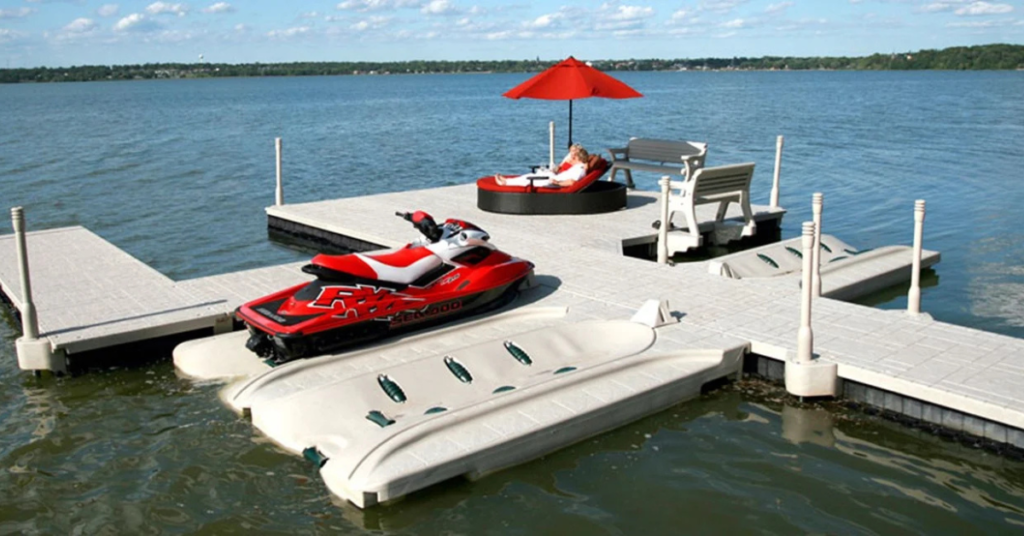
Mooring personal watercraft directly to a standard dock face exposes the vessel’s composite hull to continuous wake friction, brackish staining, and pump-impeller fouling. A modular expansion allows for the seamless integration of drive-on PWC ports, such as the Wave Armor SLX and Apex series.
These ports utilize an adjustable, independent polyurethane roller matrix that absorbs kinetic impact during docking and simplifies launching, eliminating the need for expensive overhead mechanical cable lifts.
3. Adaptive Layout Engineering
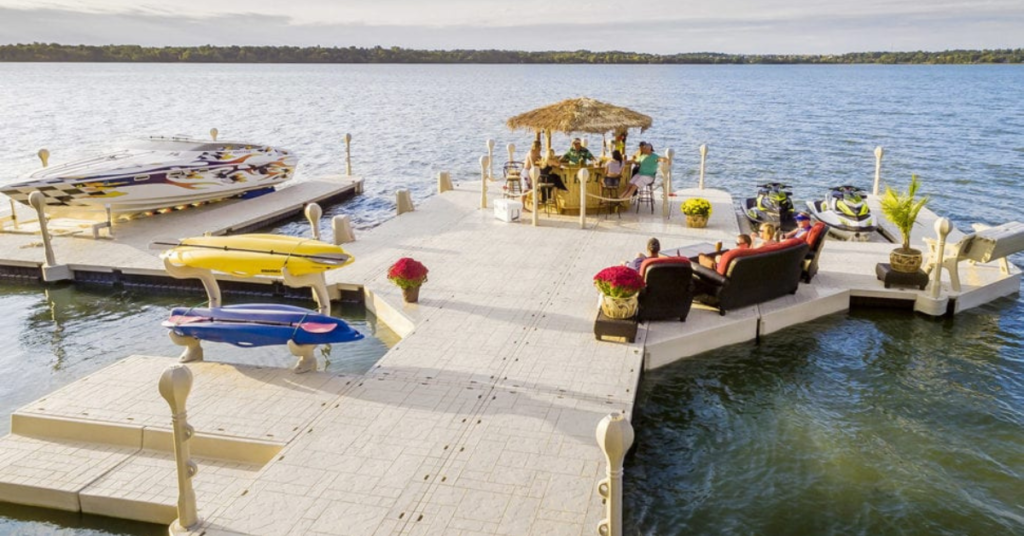
Unlike permanent structures, modular platforms allow you to change your layout configuration at any time. A straight-line finger pier can be converted into a T-shape, an L-shape, or a completely enclosed multi-slip marina layout by unlinking the structural connectors and adding new perimeter modules.
Structural Anatomy of a Modular Dock Expansion
Expanding a floating dock involves more than simply pinning two platforms together. It requires an understanding of the underlying mechanical components that maintain structural integrity across the joint lines during wind, tide, and wake events.
| Component | Engineering Function | Material Specification |
| H-Beam Connectors | Structural interlocking backbone that slides into molded perimeter pockets to join dock sections together. | Heavy-duty, high-impact composite polymer. |
| Pin Connection Kits | Secures adjacent modules or shore attachments, allowing pivoting vertical movement during tidal shifts while preventing lateral separation. | UV-stabilized poly pins with marine-grade stainless steel hardware. |
| C-Channel Kits | Heavy-duty structural reinforcement spans used to lock high-load accessories (like PWC ports) to the main floating deck. | Hot-dipped galvanized or structural marine aluminum. |
| Telescoping Brackets | Anchors the floating system to a stationary seawall or fixed timber piles, permitting smooth vertical travel while controlling the dock’s distance from shore. | Structural aluminum with poly sleeves. |
Step-by-Step Execution Guide for Dock Expansion
To ensure long-term structural integrity and compliance with local marine building guidelines, follow this systematic approach when altering or expanding your floating dock footprint.
Step 1: Hydrographic Planning and Load Assessment
Before selecting new modules, analyze your physical waterfront boundaries. Measure the total available water frontage, checking for navigation channels, rip-rap boundaries, and setbacks from neighboring property lines.
Next, calculate the total dynamic load requirements. If you are adding a PWC port to accommodate a heavy three-passenger watercraft, you must ensure the adjacent main dock modules possess enough aggregate buoyancy to prevent localized dipping when the craft is fully docked.
Step 2: Selecting System-Compatible Modules
Ensure all new sections match the depth and structural connection profiles of your existing deck. Wave Armor sections utilize a universal direct-connect pocket system. When expanding the perimeter, choose reinforced H-Beam connectors to secure the joints.
If your dock is located in an open wake zone or a high-traffic coastal canal in Cape Coral or Fort Myers, choose sections featuring integrated lower side pontoons, which trap air and water beneath the deck to dampen rolling motion.
Step 3: Installing High-Load Perimeter Accessories
Once the primary deck expansion is structurally locked, add targeted utility hardware via the perimeter track system:
Drive-On Ports: Connect PWC ports using specialized channel kits. If your setup features a high freeboard dock or experiences significant tidal shifts, install an extended channel kit to maintain an optimal entry angle for incoming watercraft.
Storage Systems: Secure low-profile kayak and paddleboard racks directly into the perimeter channels. This cantilevers secondary craft over the water, keeping the central walking deck completely free of tripping hazards.
Safety Access: Bolt down heavy-duty swim ladders featuring wide, slip-resistant treads. Ensure the ladder mounts directly over a structural joint or internal framing point to properly distribute vertical leverage when swimmers climb out of the water column.
Step 4: Configuring the Anchoring System
An expanded dock footprint catches more wind and current, increasing the lateral stress on your anchoring infrastructure.
If you are anchoring to a fixed concrete seawall or a timber piling system, upgrade your pipe sleeves or telescoping brackets to handle the increased load. For tidal zones, utilize oversized internal pipe sleeves that allow the expanded platform to travel smoothly up and down the guide posts without binding or jamming.
Step 5: Final Rigidity and Stability Testing
Before clearing the expanded dock for regular residential or commercial use, perform a structural stress test. Walk the perimeter joint lines to verify that the H-beam connectors are fully seated and that the transition between modules is flush. Check that all perimeter bumpers, cleats, and bow stops are torqued down to factory specifications.
Case Studies: Real-World Deployments in Southwest Florida
Southwest Florida’s coastal waterways feature unique challenges, including strict environmental regulations, shallow flats, and intense tidal shifts. These real-world installations demonstrate how modular Wave Armor systems solve these regional engineering issues:
Case Study 1: Multi-Vessel Fleet Scaling — Fort Myers, FL
The Challenge: A residential property owner on the Caloosahatchee River upgraded from a single center-console boat to a multi-vessel fleet, adding two luxury personal watercraft. The existing fixed timber dock lacked the space and flexibility to safely accommodate the new watercraft without risking wake damage from passing river traffic.
The Engineering Solution: MacDuff Marine designed a floating modular expansion that integrated directly with the client’s existing fixed framework. We deployed two high-buoyancy Wave Armor floating deck sections connected via heavy-duty composite H-Beams, creating an L-shaped perimeter extension. Two SLX6 PWC ports were integrated directly into the new floating deck using 25 ¾-inch galvanized steel C-channel connection kits to handle the high river freeboard.
The Result: The dry-docking port configuration completely isolated the PWCs from aggressive river wakes and marine fouling, while the modular floating deck expansion delivered a safe, level boarding platform regardless of the river’s fluctuating water levels.
Case Study 2: Tidal Swim Platform and Kayak Launch — Cape Coral, FL
The Challenge: A canal-front homeowner in Cape Coral required a safe, low-profile water-access platform for their family. The existing vertical concrete seawall made launching kayaks and swimming highly dangerous during low-tide cycles due to the steep drop-off.
The Engineering Solution: We engineered a low-profile, modular floating swim platform anchored to the concrete seawall using a heavy-duty aluminum telescoping bracket system. The layout featured a flagstone-textured Wave Armor deck expanded with an integrated kayak launch track and an ergonomic, slip-resistant flip-up swim ladder.
The Result: The telescoping brackets allowed the entire floating assembly to rise and fall smoothly with the Gulf coast tides, ensuring the distance from the deck to the water remained constant. This configuration eliminated the hazard of climbing down a wet seawall and provided an organized, space-efficient storage and launching hub for the family’s watercraft.
The MacDuff Marine Advantage
Scaling your waterfront infrastructure requires hardware that performs under intense environmental stress and precise installation expertise. At MacDuff Marine, we specialize in supplying and configuring commercial-grade Wave Armor solutions, premium drive-on ports, and structural accessories designed to perform flawlessly in demanding marine environments.
Our factory-trained technical team manages every phase of your project—from the initial hydrographic consultation and load-bearing calculations to final precise anchoring and installation.