
Affordable vs. Luxury Boat Dock Guide
Your boat dock shapes how you live and play on the water. Choosing between a budget, no-frills boat dock and a high-end, feature-rich boat dock affects daily use, upkeep, and property value. This guide breaks down the practical differences, materials, upfront cost, maintenance, and modern boat dock technology, so you can pick the solution that fits your boat, budget, and lifestyle in Southwest Florida.
What Are the Key Differences Between Affordable and Luxury Boat Docks?
It comes down to budget, materials, and features. Affordable docks prioritize simple design and cost-effective materials to cover everyday needs. Luxury docks use premium materials, custom finishes, and convenience features that boost durability and the waterfront experience. Understanding these differences helps you decide whether saving now or investing for the long term makes more sense for your priorities.
How Do Dock Materials Impact Cost and Durability?
Your material choice drives both initial cost and long-term performance. Entry-level docks often use pressure-treated lumber or basic composites, cheaper up front but requiring more ongoing maintenance. Premium options like aluminum, marine-grade HDPE, or advanced composites resist corrosion, rot, and UV damage, which raises the purchase price but typically lowers maintenance over time. Evaluate both sticker price and expected upkeep to judge true value.
Which Features Define Luxury Boat Docks?
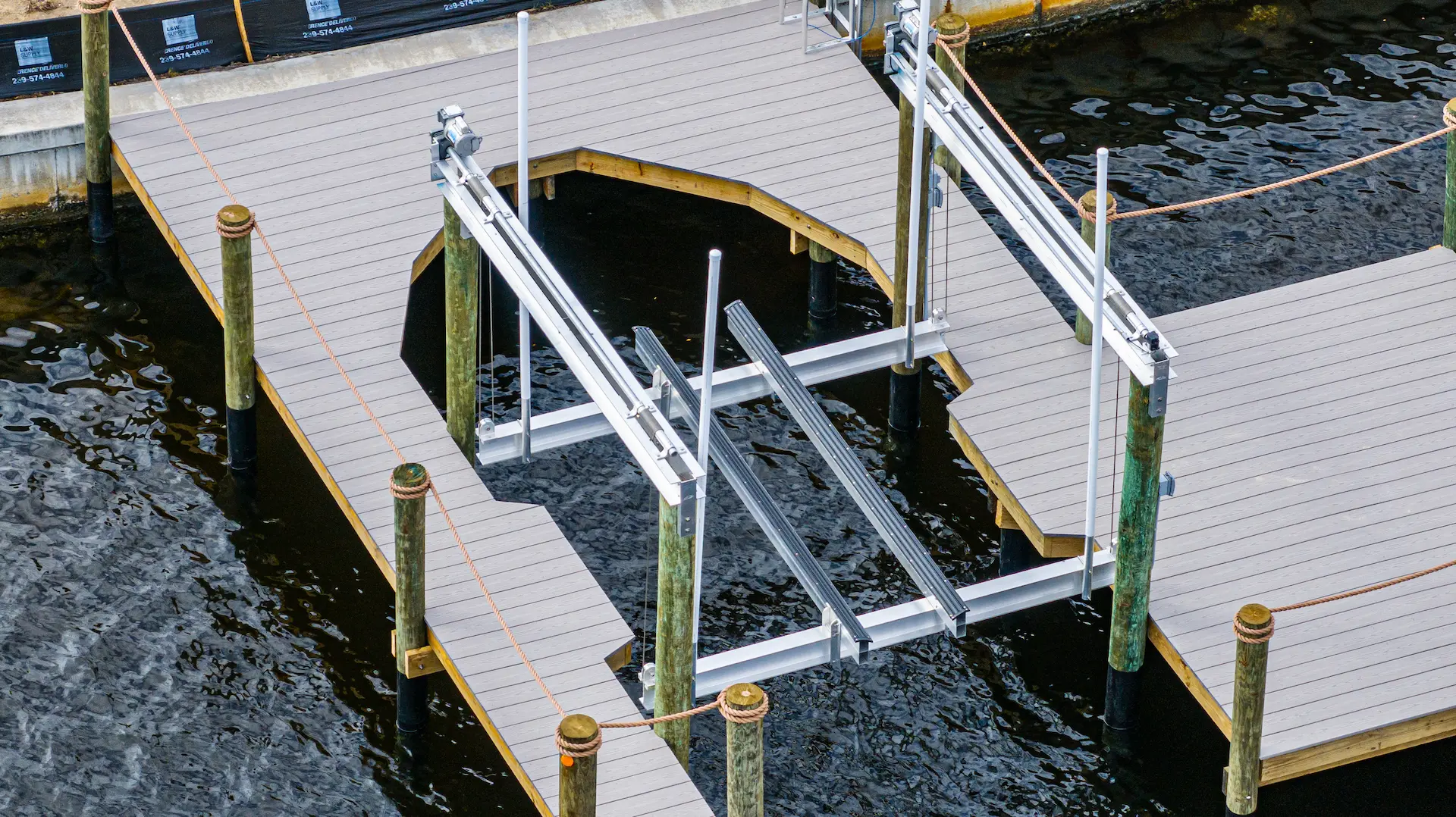
Luxury docks add convenience and polish: custom lighting, built-in power and water, advanced lift and mooring systems, and tailored finishes that blend with your property. Those extras simplify everyday use, improve safety, and create a more inviting waterfront for family and guests, often justifying the higher upfront cost.
How Much Does Boat Dock Installation Cost in Southwest Florida?
Costs vary by design, materials, and site conditions. As a rule of thumb, basic docks cost meaningfully less than luxury, customized docks, large, heavily customized projects cost considerably more still. Use these ranges to plan, then get site-specific estimates to refine your budget: request an estimate and we’ll quote your project in writing.
What Factors Influence Custom Boat Dock Pricing?
Several elements drive cost:
- Size of the Dock: Larger docks need more materials and labor, which raises the price.
- Material Choices: Premium metals and engineered plastics cost more up front but usually reduce maintenance over the life of the dock.
- Location Factors: Water depth, soil conditions, permitting, and site access all affect installation complexity and cost.
How to Budget for Affordable vs. Luxury Dock Options?
Budget for both upfront and ongoing costs. Basic docks keep the initial investment lower; luxury builds cost more up front. Consider financing, phased installations, or prioritizing must-have features first. Higher-quality materials often mean fewer repairs and lower lifecycle costs, so weigh long-term savings against the initial investment.
Which Dock Materials Are Best for Affordable and Luxury Boat Docks?
Choose materials that balance durability, maintenance, appearance, and cost. Below are common options and what to expect from each.
What Are the Pros and Cons of Composite Wood and Other Materials?
Composite wood is a popular economical choice because it resists rot better than untreated lumber. It can fade or shift over time and usually needs periodic upkeep. Aluminum and marine-grade plastics (HDPE) offer superior longevity and low maintenance but at a higher initial cost. Look beyond the sticker price and consider long-term performance.
- Composite Wood:
- Pros: Budget-friendly; better rot and insect resistance than traditional lumber.
- Cons: Can fade, warp, or need replacement sooner than metal or plastic options.
- Aluminum:
- Pros: Lightweight, corrosion-resistant, durable, and low-maintenance.
- Cons: Higher up-front cost.
- Marine-Grade Plastics (HDPE):
- Pros: Extremely durable, resists UV and saltwater, and needs little upkeep.
- Cons: Greater initial expense versus wood.
Research highlights HDPE floating docks as a cost-effective, low-maintenance option for many marine uses.
HDPE Floating Docks: Cost-Effective & Durable Pier Solutions
Traditional piers can be expensive, difficult to build in remote locations, and require frequent maintenance. HDPE floating docks offer a practical alternative: faster installation, lower maintenance, and flexibility for sites with limited access. In regions with many small islands, HDPE docks can support fisheries, tourism, and recreation where conventional construction is impractical. (Source: study on high-density polyethylene floating docks as pier solutions for small-island connectivity, 2026.)
How Do Local Environmental Conditions Affect Material Choice?
Southwest Florida’s salt air, humidity, and storm exposure influence material selection. Aluminum and HDPE perform well here because they resist corrosion and weathering. Site-specific factors, tides, currents, and protected habitats, also shape design and permitting. Choose materials suited to the local environment and your dock’s intended use.
Because local ecosystems can be sensitive, environmental assessments are commonly required to ensure docks meet Florida standards. Federal projects follow Council on Environmental Quality (CEQ) regulations under the National Environmental Policy Act (NEPA), the U.S. Air Force’s published environmental assessment for a 20-slip dock at MacDill AFB, Florida, is one example of the process.
What Maintenance Is Required for Affordable and Luxury Boat Docks?
Maintenance needs vary by material and complexity. Knowing what to expect helps protect your investment and avoid surprises.
How Does Maintenance Differ Between Dock Types?
Affordable docks usually need regular inspections and repairs to wooden components, sealing, replacing boards, or treating fasteners. Luxury docks built with aluminum or HDPE typically require less frequent, simpler upkeep, though systems like lifts or integrated power may need specialized servicing. Routine cleaning and prompt repairs extend service life and keep the dock safe.
What Are Cost-Effective Maintenance Tips for Waterfront Property Owners?
Simple, regular care keeps costs down:
- Regular Inspections: Check structure, fasteners, and hardware at least twice a year.
- Cleaning: Clear debris, algae, and marine growth to prevent damage and slipping hazards.
- Seasonal Maintenance: Secure loose elements and prepare for storms or seasonal shifts.
These basic practices help stretch the life of your dock and reduce long-term repair costs.
How to Choose the Right Boat Dock for Your Watercraft and Budget?
Select a dock based on how you use your boat, the vessel’s size, and how much time and money you want to spend on upkeep. Think about daily routines and future plans before committing to materials and features.
What Dock Features Suit Different Boat Sizes and Types?
Match dock features to your boat. Larger vessels need wider slips and stronger structural support; smaller craft can work with compact, simpler layouts. Keep these priorities in mind:
- Slip Size: Confirm the slip fits your boat’s length and beam.
- Weight Capacity: Ensure the dock and lifts support your boat’s dry and wet weight.
- Access: Consider boarding ease, storage, and approach angles for safe, convenient use.
How Can Customization Enhance Your Dock Experience?
Customization tailors the dock to your routines: seating and storage for entertaining, dedicated gear areas, custom lighting for safety and ambiance, or specialized lifts and mooring systems for easier handling. Thoughtful customization makes the dock more enjoyable and practical every day.
What Are the Latest Trends in Luxury Boat Dock Features and Technology?
Marine design keeps evolving. Luxury docks now commonly integrate smart features and greener materials to improve convenience and reduce environmental impact.
How Do Smart Dock Technologies Improve Functionality?
Smart dock tech, automated mooring, integrated lighting, and remote monitoring, simplifies operations and improves safety. These systems let you control lifts, lights, and system checks from your phone, reducing hassle and giving peace of mind when you’re away.
What Eco-Friendly Materials Are Emerging in Dock Construction?
Sustainability is pushing new material choices. Recycled plastics, responsibly sourced lumber, and advanced polymer composites are being used to lower environmental impact while delivering strong, long-lasting performance. These options appeal to owners who want durable docks with a smaller footprint.
Advanced polymer composites (APCs) are gaining traction in marine applications because they combine durability with environmental benefits: strength, corrosion resistance, and low weight, though recycling and long-term fiber durability remain active research topics. (Source: review of advanced polymer composites for eco-friendly marine applications, M.N. Mullungal, 2026.)
| Dock Type | Material | Upfront Cost | Maintenance Level |
|---|---|---|---|
| Affordable | Composite Wood | Lower (request an estimate) | Moderate |
| Luxury | Aluminum | Higher (request an estimate) | Low |
| Luxury | Marine-Grade Plastic (HDPE) | Premium (request an estimate) | Low |
This table highlights typical material choices, expected relative costs, and maintenance needs so you can compare options at a glance.
Choosing the right dock is a big decision for any waterfront property owner. When you’re ready to explore options that match your boat and budget, request an estimate and our team will work with you to plan the best custom solution for your property.
Frequently Asked Questions
What are the environmental considerations when building a boat dock?
Environmental factors include nearby wildlife, water quality, and shoreline stability. Permits and assessments typically address these concerns to protect habitats and meet regulations. Choosing low-impact materials and siting the dock thoughtfully can reduce harm. Consult local agencies or an experienced contractor to ensure compliance and minimize ecological effects.
How can I enhance the safety of my boat dock?
Improve safety with non-slip decking, adequate lighting, handrails, bumpers, and clearly defined walkways. Regular structural inspections and maintenance prevent hazards. For high-traffic properties, add visible signage and safety gear like life rings and ladders.
What financing options are available for dock construction?
Financing options vary. Common choices include personal loans, home equity lines of credit, and contractor financing plans where available. Check local banks and credit unions for home-improvement loans and compare terms to find the best fit for your budget.
Are there any permits required for dock construction in Southwest Florida?
Yes. Dock projects generally require local building permits and environmental permits, and sometimes state or federal approval if the work affects navigable waters or protected areas. Permit requirements depend on location and scope, so work with a knowledgeable contractor or permitting specialist to navigate regulations before you start.
What are the benefits of customizing a boat dock?
Customization delivers a dock built around how you use your waterfront: better storage, comfortable seating, dedicated lift systems, and lighting for night use. A well-designed custom dock also improves aesthetics and can increase property value. Custom work ensures your dock meets both practical needs and style preferences.
How do seasonal changes affect dock maintenance?
Seasonal weather affects maintenance cycles. In Southwest Florida, summer storms can bring debris and high winds that require post-storm inspections and repairs. During calmer months, schedule routine cleaning and hardware checks. Adjust your maintenance plan to local weather patterns to keep the dock safe year-round.
What are the latest innovations in dock technology?
Recent advances include automated mooring and lift systems, app-based monitoring, energy-efficient LED lighting, and sustainable materials like recycled plastics and advanced composites. These technologies improve convenience, safety, and longevity while often reducing environmental impact.
Get a Free Quote for Your Custom Dock
Choosing the right dock starts with a conversation about your boat, your budget, and your waterfront. Get a Free Quote or Request an Estimate from MacDuff Marine, or call or text (239) 872-4300, and we’ll plan the right custom solution for your property.