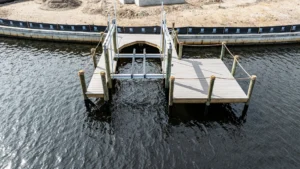

The best floating dock system is not simply the one with the longest feature list. It is the system that fits the property, follows the way you actually use the waterfront, and can be configured around the boats, personal watercraft, kayaks, swimming access, and other needs you have today and may add later.
For Southwest Florida homeowners, choosing a floating dock also means considering changing water levels, saltwater exposure, existing seawalls or pilings, water depth, available shoreline space, and how people will move between the property and the water.
MacDuff Marine is an authorized Wave Armor dealer and installs Wave Armor floating dock systems throughout Southwest Florida. This guide explains the factors worth comparing before choosing a system.
What Makes a Floating Dock System the Right Choice?
There is no single dock layout that is right for every waterfront. The first step is understanding what the property needs the dock to do.
How You Use the Water
Boats, PWCs, kayaks, paddleboards, swimming, fishing, loading gear, and general waterfront access all influence the layout.
The Property
Water depth, changing water levels, shoreline configuration, existing structures, and available space affect how a floating system can be positioned.
Future Plans
If another Jet Ski, kayak, boat port, or dock section may be added later, planning for that now can make future changes easier.
Look for a Truly Modular Floating Dock System
Wave Armor uses individual dock sections that can be connected in different orientations and configurations instead of requiring every property to use one fixed dock shape.
The Wave Dock system uses molded H-Beam channels along compatible sections. Wave Armor H-Beams slide into those channels to connect sections side-to-side or end-to-end.
This gives installers the ability to build layouts around the actual waterfront, including straight runs, turns, wider platforms, slips, and other configurations.
Start Simple
A property may only need a walkway and water-access area rather than a large platform.
Build Around Watercraft
Compatible PWC ports, boat ports, pontoon ports, and kayak access can be incorporated into the larger layout.
Plan for Expansion
Modular construction can make future changes more practical when the original layout and mounting system are planned with expansion in mind.
Wave Armor's Dock Builder is useful for seeing current dock shapes, sections, ports, and accessories.
Understand What the Floating Dock Is Made From
Traditional waterfront materials and rotomolded floating systems behave differently, so construction should be part of the buying decision.
Wave Armor dock sections use UV-protected rotomolded polyethylene. Current Wave Dock sections use a two-piece design consisting of the top deck and a foam-filled bottom float.
Rotomolded Polyethylene
The dock sections use molded polyethylene instead of a traditional wood walking surface.
Foam-Filled Bottom Float
Current Wave Armor dock sections use foam-filled lower floats as part of the floating structure.
Flagstone-Textured Surface
Wave Armor uses a molded flagstone-style texture on its current dock sections rather than a traditional wood-plank surface.
These construction differences do not make a dock immune to damage or eliminate the need for inspection. They do remove maintenance tasks associated specifically with wood decking, such as staining or resurfacing the deck boards.
Consider How Water Levels Change at the Property
A fixed dock remains at one elevation while the water beneath it changes. A floating dock rises and falls with the water.
That can make access more consistent on waterfronts where tides, rainfall, lake levels, or other water-level changes create noticeable differences between the dock and the water.
The floating sections still need an appropriate connection and anchoring approach. Water depth, bottom conditions, existing pilings, seawalls, and the proposed layout all matter.
Build the Dock Around the Watercraft You Actually Own
A dock should make launching, boarding, loading, and storing watercraft easier. Before choosing the layout, identify what needs dedicated access.
PWC Ports
Wave Armor PWC ports provide drive-on floating storage for compatible personal watercraft.
Boat Ports
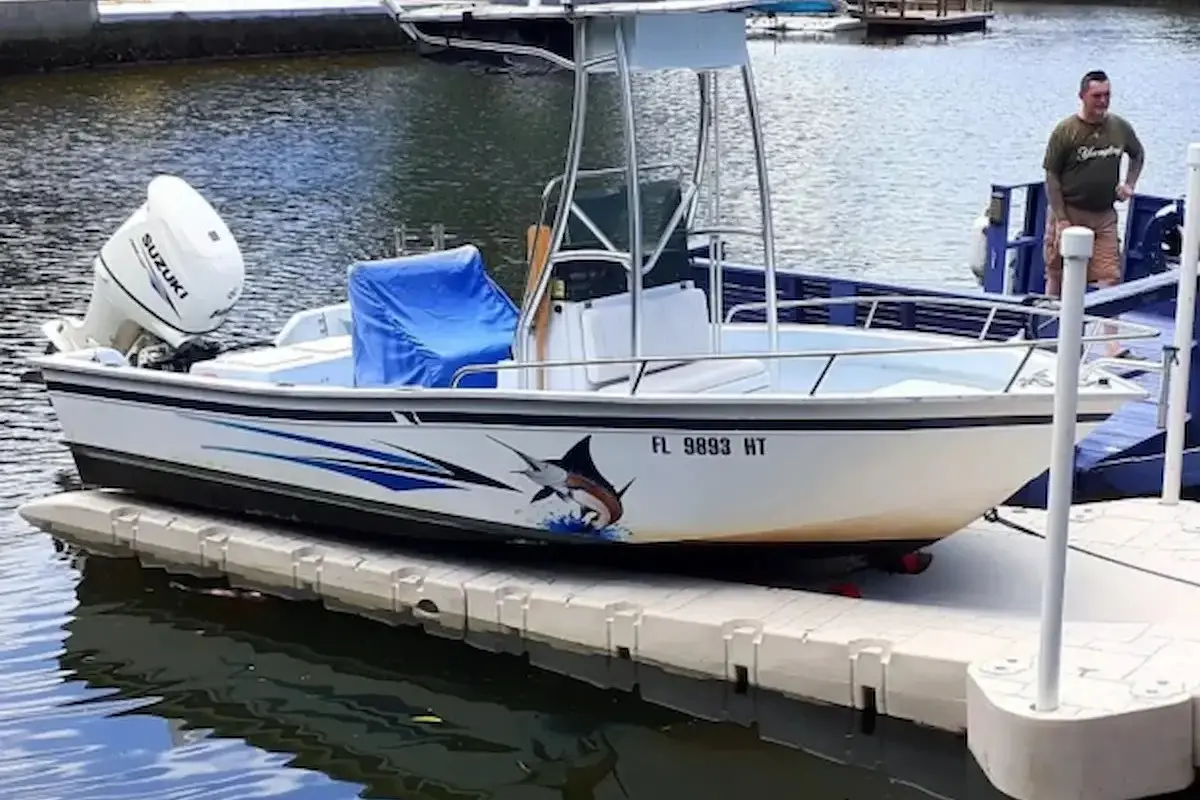
Wave Armor boat ports provide floating drive-on storage options for compatible smaller vessels.
Pontoon Ports
Dedicated pontoon-port systems are available for compatible pontoon applications where drive-on floating storage makes sense.
Kayaks and Canoes
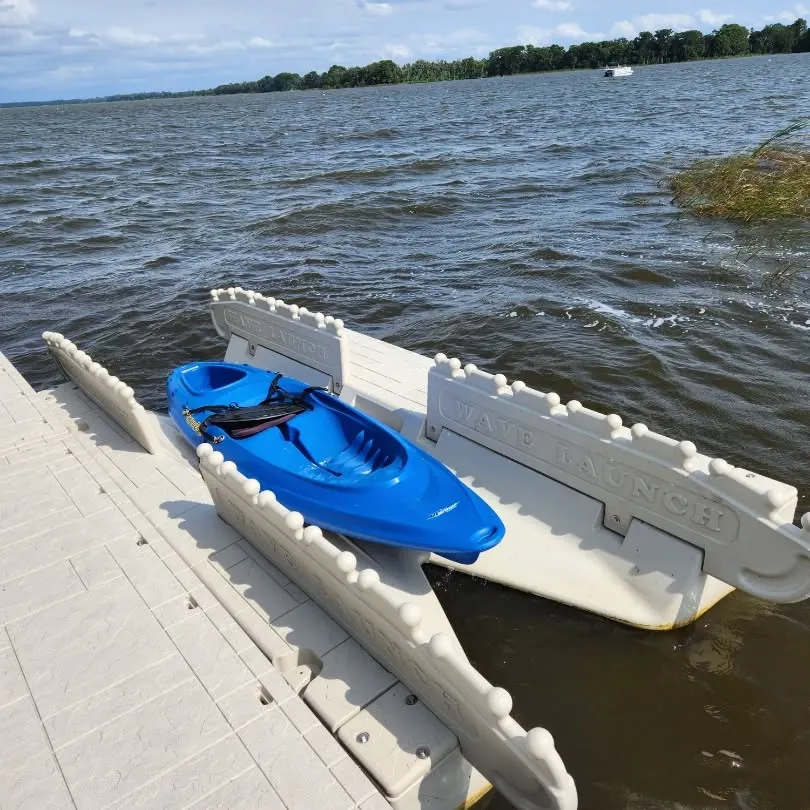
Wave Armor kayak access provides a lower-profile launch and recovery point for paddlecraft.
Swimming Access
Ladders, steps, and lower access areas can be incorporated when entering and leaving the water is part of the plan.
Walking and Loading Space
Leave enough open dock surface for boarding, carrying gear, and moving between different parts of the waterfront.
A Floating Dock Can Do More Than Store a Boat or PWC
Kayaks and canoes are a good example of why the layout matters as much as the dock material.
A general walking platform and a purpose-built paddlecraft launch solve different problems. Wave Armor kayak access creates a lower launch and recovery point that can be incorporated into a larger floating dock layout.
That can make sense for homes where paddlecraft are used regularly and dragging a kayak across the shoreline or launching from a higher fixed dock is inconvenient.
Look at the Accessory System Before Finalizing the Layout
Accessories are easier to use when their locations are planned before the dock is installed.
Storage
Dock boxes and bench storage can keep frequently used waterfront equipment from occupying the main walking surface.
Ladders and Steps
Water-access components should be positioned where people can safely reach them without interfering with watercraft.
Kayak Storage
Racks can keep paddlecraft organized when they are not in the water.
Bumpers and Cleats
Compatible hardware can be planned around boating and mooring needs where appropriate.
Lighting
Compatible dock lighting can improve visibility around access points after sunset.
Seating and Shade
Seating and compatible shade accessories can help the dock function as an outdoor waterfront space.
Browse MacDuff Marine's dock accessories for current options.
Think About How the Dock Will Look From the House
Function should drive the design, but a waterfront dock is also visible from the yard, patio, lanai, and windows of the home.
Wave Armor's current sections use a molded flagstone-style deck surface. Different section sizes and shapes allow the finished layout to include wider gathering areas, corners, and purpose-built access areas rather than only a narrow straight walkway.
The goal is not to claim one dock design is universally more attractive than another. It is to choose a layout that looks intentional and works with the waterfront.
Compare the Maintenance Requirements
No waterfront system should be sold as maintenance-free.
Rotomolded polyethylene changes the maintenance cycle compared with wood. The dock surface does not require the same staining or resurfacing associated with traditional wood decking, but the overall system still deserves cleaning and periodic inspection.
- Clean dock surfaces as needed.
- Inspect visible connection hardware periodically.
- Check mounting and anchoring components.
- Look over the system after unusual impacts or weather conditions.
- Follow manufacturer instructions for installed ports and accessories.
Wave Armor publishes installation and product instructions for its current product system.
Check the Warranty for Each Part of the System
Wave Armor's warranty periods differ by product category. That is why the entire dock system should not be described with one blanket warranty number.
Floating Docks
Wave Armor currently lists a 10-year residential warranty for its floating dock sections.
Watercraft Ports
PWC ports, boat ports, and pontoon ports currently carry 8-year residential warranty periods.
Connections and Accessories
H-Beam connections, anchoring kits, and most dock accessories currently carry shorter 2-year residential periods. Solar lights are an exception.
Manufacturer terms, exclusions, and documentation requirements apply. Review the current Wave Armor warranty before relying on warranty coverage in a purchasing decision.
Do Not Choose a Dock Based on a Hurricane-Proof Claim
Florida waterfront homeowners naturally think about severe weather, but no floating dock should be represented as hurricane-proof.
Severe weather can create site-specific forces involving wind, water movement, debris, surrounding structures, connections, and anchoring.
The more useful questions are how the dock is mounted, what manufacturer preparation applies, which accessories can be secured or removed, and what should be inspected after unusual conditions.
Permitting Depends on the Property and the Project
A floating dock is still waterfront construction. Permit and environmental requirements can change based on location, waterbody, dock footprint, connection method, and the overall scope.
A dock layout found online should therefore be treated as inspiration, not as a final construction plan for a specific property.
MacDuff Marine reviews the site and proposed waterfront use before the final layout is quoted.
Property owners can also review Florida DEP waterfront permitting resources .
Why Wave Armor Is Worth Considering for a Florida Waterfront
The strongest argument for Wave Armor is not one single feature. It is how the components work together as a larger waterfront system.
Modular Sections
Multiple dock sizes and connection orientations make it possible to plan around different waterfront footprints.
Floating Watercraft Access
Compatible PWC, boat, pontoon, and kayak-access systems can be incorporated when needed.
Rotomolded Construction
Current dock sections use UV-protected rotomolded polyethylene with foam-filled lower floats.
Accessory Ecosystem
Storage, access, lighting, bumpers, cleats, seating, and other accessories can be planned with the dock.
Manufacturer Documentation
Wave Armor publishes specifications, instructions, warranty information, and a dock-building tool for current products.
10-Year Dock Warranty
Current residential Wave Armor floating docks carry a 10-year manufacturer warranty, subject to current terms.
Questions to Ask Before Choosing Your Floating Dock
What needs water access?
List every boat, PWC, kayak, canoe, paddleboard, swimming area, and activity the dock should support.
How does the water level change?
Consider tides, rainfall, lake-level changes, and how those conditions affect everyday access.
How will the dock be secured?
The mounting and anchoring approach should be selected for the actual property.
What might you add later?
Additional PWC ports, kayak access, storage, seating, or dock sections are easier to plan before the original layout is finalized.
What maintenance is involved?
Compare realistic cleaning and inspection requirements instead of relying on “maintenance-free” marketing.
What does the warranty cover?
Confirm coverage separately for dock sections, ports, connections, anchoring components, and accessories.
Common Questions About Floating Dock Systems
What is the best floating dock system for a Florida waterfront?
The right system depends on the property, water conditions, watercraft, desired layout, mounting requirements, and future expansion plans. MacDuff Marine recommends Wave Armor for many Southwest Florida projects because of its modular construction and broad range of compatible waterfront components.
What are Wave Armor floating docks made from?
Current Wave Armor dock sections use UV-protected rotomolded polyethylene with a two-piece design consisting of an upper deck and foam-filled bottom float.
Can a Wave Armor dock be expanded later?
Wave Armor uses modular sections and H-Beam connections that allow compatible sections to be joined in different configurations. Future expansion still needs to work with the installed anchoring, mounting system, and available space.
Can I add a Jet Ski dock to a Wave Armor floating dock?
Yes. Wave Armor manufactures compatible drive-on PWC ports that can be incorporated into appropriate floating dock layouts.
Can a floating dock include kayak access?
Yes. Wave Armor offers dedicated kayak and canoe access components that can be incorporated into compatible dock systems.
How long is the Wave Armor floating dock warranty?
Wave Armor currently lists a 10-year residential warranty for floating docks. PWC, boat, and pontoon ports currently carry 8-year residential periods, while many connections and accessories carry shorter warranty periods.
Are Wave Armor docks maintenance-free?
No dock should be described as completely maintenance-free. Rotomolded construction removes maintenance associated specifically with wood decking, but the dock, connections, mounting components, ports, and accessories should still be cleaned and inspected when appropriate.
Are floating docks hurricane-proof?
No floating dock should be represented as hurricane-proof. Severe weather creates site-specific forces, and preparation should follow the conditions at the property and applicable manufacturer guidance.
Get a Floating Dock Layout Built Around Your Property
Send MacDuff Marine photos of the waterfront and tell us what boats, PWCs, kayaks, swimming access, or other features you want the finished dock to support.